Climate change and mental health: you are not alone
Climate change can bring up anxiety, guilt, helplessness, burnout, and isolation. This guide explains why those feelings happen and what can help you stay grounded.
Climate change is not only a scientific, political, or economic issue. For many people, it is also something lived emotionally: as anxiety, guilt, grief, powerlessness, burnout, or the feeling that something is deeply wrong. If climate change has started to feel heavy in a way that is hard to explain, you are not imagining it and you are not alone.
The emotional response makes sense. Climate change shows up in headlines, weather, future plans, conversations about children, money, consumption, and what kind of world lies ahead. It asks people to care about something enormous while often making them feel too small to influence it.
This article is a guide to the mental side of climate change. Not to tell you to feel differently, and not to pretend the problem is smaller than it is. Understanding these feelings and how to cope with them is an important step, both for your own wellbeing and for empowering action.
Why climate change hits so hard psychologically
Much of what makes climate change emotionally difficult is its scale. Most people are used to problems that are local, visible, and relatively bounded. Climate change is none of those things. It is global, long-term, and woven into the systems that power everyday life. That makes it unusually hard for the mind to contain.
It is also a problem that can make people feel morally implicated without giving them anything like full control. People are told the issue is urgent, that we are heading for disaster, and that we need to act now or it will be too late. At the same time, the problem is clearly bigger than any one person, household, or purchase decision. That tension can produce a painful split: this matters enormously, but what can one person really do about it?
Why the way climate change is framed can make it feel even worse
Climate distress is shaped not only by climate change itself, but by the way climate change is presented. Most people do not encounter the issue through calm, balanced, long-view reporting. They encounter it through headlines, viral posts, dramatic weather footage, and a constant stream of bad news designed to grab attention.
That matters. Media systems are built to reward novelty, danger, and emotional intensity. Worst-case scenarios spread faster than trend improvements. Sudden disaster is easier to package than slow progress. The result is that many people absorb a picture of climate change filtered through the most alarming lens available.
This does not mean the danger isn't real. It means the emotional picture many people carry is often narrower and darker than the full evidence supports. If someone mostly sees catastrophe and almost never sees progress, it becomes easy to conclude that there is nothing they can do.
One of the clearest antidotes to climate fatalism is seeing the actual trendlines. Current-policy warming estimates are near 2.7°C - still too high, but they are far below the old 4 to 5°C worst-case expectations.
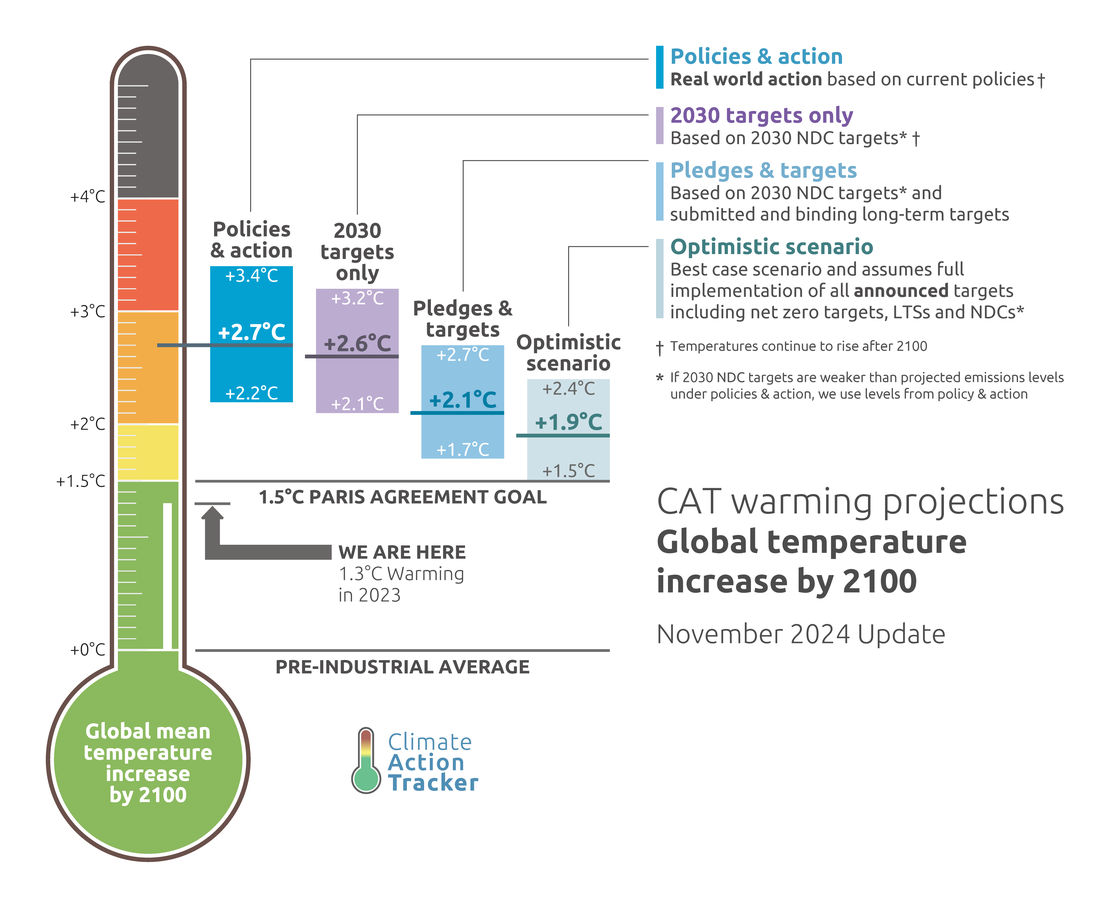
This isn't the only sign of progress. Our article The biggest climate progress trends you probably haven't seen looks at the data people often miss. Knowing about this progress can be the difference between feeling like you are joining a powerful movement versus fighting the world head on.
The feelings climate change brings up
Climate change can cause a mix of feelings, which often overlap and can reinforce each other. Its important to understand each of these common feelings individually in order to process them.
Anxiety: Imagining the worst case future
Anxiety is often part of that mix, and it is becoming common enough that many people now know it by name: eco-anxiety. It can mean dread about the future, spiraling after extreme-weather news, or the feeling that your mind keeps returning to the same frightening future scenarios. It tends to grow in the space between knowing the problem is real and not knowing how bad things will get or what role you can play inside something so large.

That response is not irrational, but it is important to step back and ground yourself with the actual data and focusing on solutions that are happening. Many worst case projections claim to be based on science, but are often exaggerated in order to cause alarm. Our article Is eco-anxiety normal? looks more at climate anxiety and how to keep it from taking over.
Guilt: When concern turns inward
Guilt can show up around flying, driving, eating meat, ordering takeout, buying new things, or simply existing inside a fossil-fuel-based society. It can make you feel like you are the problem no matter what you do. At it worst, it can make you feel like the earth would be better off without you in it than with you.
While it is important to look at what actions can reduce carbon in our lives, guilt often leads to hyperfocusing on your own impact, instead of looking outward at how your actions can affect others. Coping with guilt means fighting the urge to minimize yourself, which can only go so far. Instead focus on how your actions can have impact beyond yourself. Thinking externally is the only way you can have an outsized impact beyond your own emissions.
Our article How to deal with climate guilt looks more closely at this feeling, and how you can look outside yourself.
Powerlessness: When the problem feels too big
Powerlessness often sits underneath the rest. The problem feels too large. The political system feels too slow. Fossil fuel interests feel too entrenched. Individual actions can seem tiny next to global emissions. That is where climate concern often starts to slide into emotional paralysis.
What helps loosen that feeling is understanding that influence rarely works in a straight line. Action is not only about one person's direct emissions. It is also about visibility, social norms, demand, policy, and the way systems change when enough people begin moving in the same direction. Our article Does reducing your personal emissions actually make a difference? follows that logic in more detail.
Isolation: When it feels like you are carrying it alone
You can care deeply about climate change and still feel as if you are carrying that concern mostly alone. It can start to seem like other people are indifferent, dismissive, or simply less affected by it than you are, which makes the emotional burden heavier.
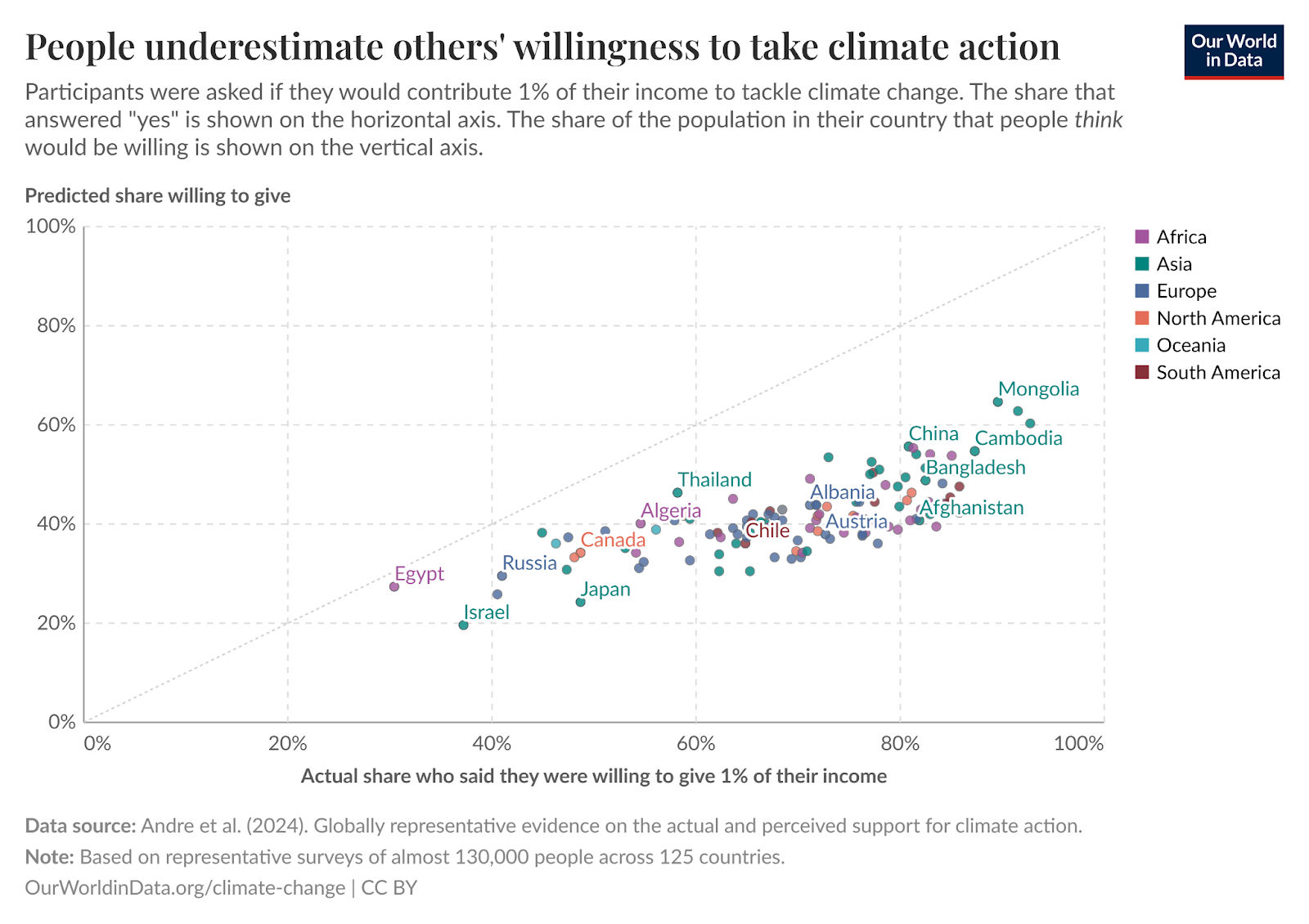
That feeling is often intensified by the perception gap: people underestimate how many others care, worry, or would support action. Our article Do many people even think about climate change? explores that gap in more detail.
Burnout: When caring becomes exhausting
Burnout can follow when concern stays high for too long without enough emotional recovery, perspective, or visible wins. You can start from a place of caring deeply and end up feeling like nothing you do will make a difference.
Burnout often carries shame with it, as if running out of emotional energy means you are not doing enough. Its important to know that no one can do this alone, and we all need to take mental breaks. Our article How to care about climate without burning out takes a closer look at this.
Perfectionism: When caring turns rigid
When you care a lot, it can start to feel as if every step needs to be maximally impactful, fully informed, and morally clean. But perfectionism turns care into paralysis. Instead of taking action, you keep thinking if what you are doing is really the best thing you could do. It's important to remember that imperfect action that you do is more impactful than perfect action that you don't. And starting small, even if the actions don't do much, is important to build momentum toward larger actions over time.
Our article Don't let 'perfect' climate action be the enemy of good looks at how to embrace imperfect action and stop worrying if you are doing the right thing.
What helps people stay grounded
The goal is not to stop feeling climate change. The goal is to carry those feelings without letting them collapse into despair, numbness, or constant self-punishment. Coping with these feelings will not only improve your mental state, but empower you to take action to help reduce climate change itself.
One important shift is to deliberately look at the whole picture, not just the most sensational part of it. Progress is not the same as victory, but seeing real progress matters. It helps counter the false sense that nothing is changing. It turns climate awareness from pure dread into a problem we can address. Also, recognize that some forms of climate media are designed to intensify fear, not to help people think clearly. Staying informed is important. Being psychologically flooded is not the same thing as being informed.
It also helps to connect action to visible meaning. People are more resilient when they can see how what they do fits into something larger, whether that is changing a local norm, supporting a policy, talking to other people, reducing emissions, or simply making climate concern more visible and less isolating. Take time to think about how your actions are impacting the people around you, or shaping trends and norms, and not just the pounds of CO2 they directly prevent. Talking about climate more within your own circle in a positive, non-threatening way can reinforce that feeling of shared momentum. Our article How to talk about climate change without being a downer looks at how to do that without making people shut down. You are the best person to influence those close to you.
You are not alone
Finally, remember that you don't need to solo climate change. Working with a group of people going trough these same feelings can really help you feel understood, and like you are not taking on this problem all alone. If a particular climate action resonates with you, finding a related group in your area can really take it to the next level.
If climate change has been affecting your mental health, that does not mean you are weak, broken, or overreacting. It means you are responding to something real. Many other people are feeling versions of the same thing, even if they do not always talk about it clearly.
You do not need to stop caring in order to cope. You do not need perfect peace of mind before you can keep going. What helps is learning how to carry climate awareness with more perspective, more connection, and more self-compassion.
We can do this.
Want to learn more?
Get updates on climate progress and how you can help.