Does reducing your personal emissions actually make a difference?
There are plenty of individual actions people can take to reduce emissions, from changing how they eat to home improvement, but this feels insignificant in terms of global emissions. While it's true that installing solar panels is not going to change the world on its own, It's important to consider that these changes do more than just direct emissions reduction, and that you are not alone.
You’ve probably asked yourself this before. Coffee in hand, scrolling through another stream of headlines about floods, fires, and record-breaking heat, you pause for a moment and wonder, ‘Does anything I do actually matter?’. It’s an honest question. The scale of climate change feels vast, almost beyond human reach, while the choices we make each day seem impossibly small beside it. Somewhere in that space between enormity and effort lies the quiet beginning of real change.
History reminds us that real progress rarely begins with grand gestures or sweeping reforms. It begins with what’s close and within reach — one decision, one new habit, one subtle shift in how we move through the day. And those tiny changes? They don’t stay tiny for long. They ripple outward, influencing others, shaping culture, and eventually pressing on the very systems that once seemed unshakable.
So perhaps the question isn’t whether small actions matter, but how far their ripples can travel.
The Ripple Effect: How Change Really Spreads
Social scientists call it social contagion. It’s the idea that behaviors spread through networks just like laughter or yawns. One person starts composting, and before long their neighbors feel inspired to do the same. Research from Stanford and MIT found that when one household picks up a visible eco-friendly habit, nearby households and individuals are up to 25 percent more likely to follow.
You can see it happening everywhere. A few homes install solar panels, and soon the whole block seems to sparkle with them. It turns out, we copy each other more than we care to admit and that’s surprisingly good news for the planet.
Because when enough people change what they do, even companies take notice. They adjust products, supply chains, and even policies. What begins at a kitchen counter can eventually reshape boardroom agendas and even national conversations. People and companies move in a kind of shared rhythm. Businesses create what customers demand, and customers buy what those businesses offer. But that rhythm shifts the moment we do. Small, consistent choices in our daily lives can tilt the balance, prompting companies to rethink what they make, how they make it, and what they stand for. It’s a quiet cycle of influence, and it starts right where we live our ordinary days.
When Tiny Actions Sparked Giant Shifts
This pattern isn’t new. Take smoking bans. They didn’t begin with legislation. They began quietly with a few people saying no to lighting up indoors. A friend stepping outside after dinner, cigarette in hand. The faint curl of smoke drifting away from the table. A café owner put up a small sign that read “non-smoking area.” A workplace manager setting aside one clear corner of the office air. These tiny, almost ordinary gestures started to catch on, slowly reshaping what people expected from shared spaces. Soon, restaurants followed, then cities, turning personal choices into public policy. In the United States, local bans through the 1970s and 1980s opened the door for national action, supported by mounting research from the WHO that revealed the full impact of secondhand smoke. By 2003, that quiet movement had reached a global stage with the WHO Framework Convention on Tobacco Control, now adopted by 182 countries. What began as small acts of courtesy became a worldwide standard, a reminder that most revolutions start in everyday moments, long before the laws catch up.
Seatbelt campaigns followed a similar journey. Early slogans like “Seatbelts Save Lives” appealed to logic but didn’t always change behavior. The real shift came with a new message:‘Click it or Ticket’. It was simple, direct, and impossible to ignore. Suddenly, buckling up wasn’t just the right thing to do. It was the smart, immediate choice. That small change in framing helped push seatbelt use to more than 90 percent today.
Even the global movement against plastic bags began with one country—Bangladesh—in 2002. Public anger reached a breaking point after severe floods in Dhaka were traced to drains clogged with discarded plastic bags. Images of submerged streets and floating waste filled local news, turning frustration into a national call for change. The shift didn’t start in parliament — it began in neighborhoods. Local clean-up drives, citizen petitions, and media coverage by environmental groups like Bangladesh Poribesh Andolon (BAPA) made the issue impossible to ignore. Students, shop owners, and community leaders began urging shoppers to bring jute or cloth bags instead of plastic. As that movement gained visibility, pressure mounted on officials to act. By 2002, Bangladesh became the first country in the world to ban thin plastic bags, replacing them with cloth and jute alternatives. The impact didn’t stop there. The success of that policy rippled outward, inspiring more than 90 countries across South Asia, Europe, and Africa to introduce similar restrictions on single-use plastics, many citing Bangladesh as their model for reform.
None of these were overnight revolutions. They were the result of countless small, consistent actions, stacked one on top of another.
The Science of Habits and Systems
Change feels hard because our brains love patterns. Charles Duhigg, author of The Power of Habit, explains it as the habit loop: cue, routine, reward. You see your water bottle by your keys, grab it automatically, and feel good for skipping plastic. Do it often enough, and it becomes effortless.
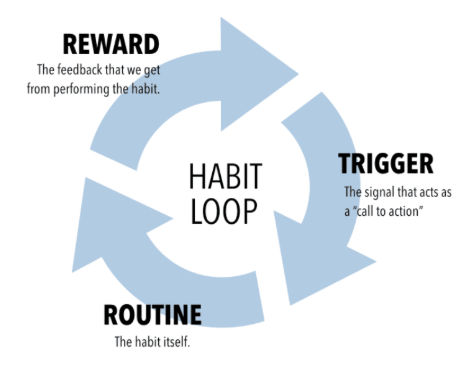
When many people repeat these small positive habits, systems start to bend around them. South Korea’s compost revolution began with just a few households. Within five years, it became a nationwide policy that cut millions of tons of food waste and inspired global change.
Consistency builds confidence. Confidence builds influence. Each tiny act sends a message to your brain, your community, and the broader world.
Why Businesses Are Paying Attention
These ripples don’t stop at individuals. Businesses and investors are watching closely because consumer choices reveal what the future looks like. According to theInternational Energy Agency (IEA), global industrial emissions dropped by 2.3 percent last year. That’s not luck. It’s companies responding to shifting consumer expectations. Nielsen found that 73 percent of global consumers are willing to change their habits to reduce environmental impact. That’s not a niche, it’s the majority speaking up. Unilever reports that its sustainable brands are growing 69 percent faster than the rest of its portfolio.

Four groups shaping consumption patterns.
When people refill bottles instead of buying new ones, beverage giants redesign packaging. When shoppers ask where materials come from, brands rework their supply chains. The cycle continues. We shift, they adapt. Together, we create momentum that reshapes the system itself.
The Why and How of Everyday Change
Here’s the thing: most people don’t start eating less meat or installing solar panels just to save the planet. Saving money or feeling healthier might play a part, but it’s rarely the whole story. Sometimes the sustainable choice costs more or takes extra effort. What really drives people is how those choices make them feel, that quiet sense of alignment between their actions and their values. It’s the satisfaction of doing something real when the problem feels impossibly large. Small, steady actions don’t just cut emissions; they ease the weight of worry and replace it with a grounded sense of purpose.
The ‘why’ is personal which is comfort, savings, convenience. The ‘how’ is where power lies. Because when these small personal choices multiply across millions of people, they start to influence markets, policies, and social norms. That same Nielsen study showed something powerful. The willingness to change is already there. It just needs direction. And when millions of quiet actions ripple outward, they remind us that progress doesn’t always start in boardrooms, it actually starts in living rooms.
Signs of Hope
If you ever feel like nothing’s getting better, look again. While the news can make it seem like humanity is doing nothing and moving in the wrong direction, renewable energy now powers around 30 percent of global electricity, with most new power being renewable. More than 400 major companies have set net-zero goals, and many are beginning to turn those commitments into real action. Unilever, for example, aims to achieve net-zero emissions across its entire value chain by 2039 and has launched a Climate and Nature Fund to help restore ecosystems while cutting supply-chain emissions. In fashion, Burberry became the first luxury brand to secure an SBTi-approved net-zero target. It’s already carbon-neutral in its operations and is working toward a 90 percent reduction in supply-chain emissions by 2040. Examples like these show that corporate pledges are no longer just promises, they’re starting to reshape how global industries operate. Plastic bans now protect nearly half the world’s population.
Global expansion in wind, solar, and hydropower has driven renewables to account for 30 percent of the world’s electricity generation in 2024.
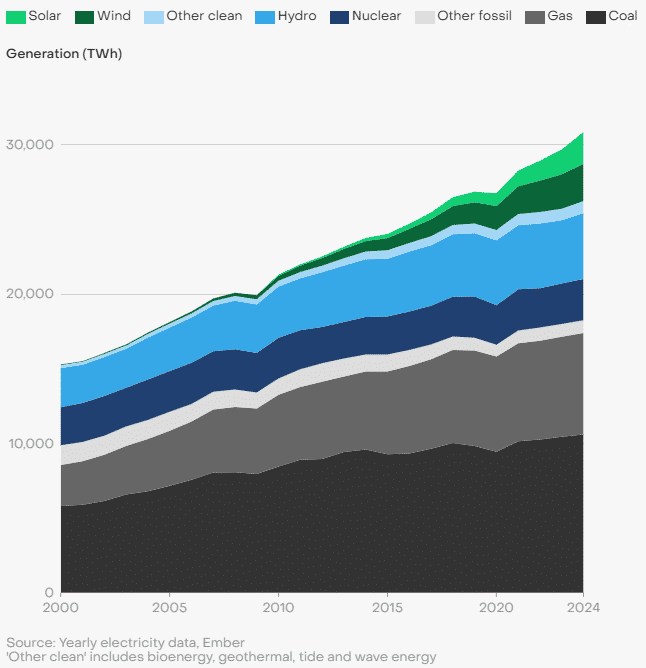
Global Power Generation trends over the last two decades(Ember,2025).
These wins didn’t come from one big breakthrough. They came from many small steps. Voters, shoppers, parents, and students. All pushing, little by little, until the system had no choice but to move. The world isn’t fixed yet, but it’s shifting. Every policy, every chart trending in the right direction, traces back to countless unseen choices made by ordinary people.
So, Do Individual Actions Really Matter?
Here’s the truth. No single act will save the planet. But every act sends a signal about the world we’re choosing to build. It tells companies what to create, governments what to prioritize, and communities what to normalize.
Imagine millions of tiny ripples merging into a single strong current. That’s how transformation happens. Quietly. Gradually. Then, all at once, it’s impossible to ignore.
So next time you grab a reusable bag, shorten your shower, or shop local, pause for a moment. That’s where the current begins.
A Small Invitation
Try something new this week. It doesn’t have to be big, just deliberate. Bring your own mug to the café or finally check out that local compost group you’ve been curious about. Small choices, made often, are how change starts to take hold.
Share one habit that makes you feel hopeful. Tell a friend why you’ve started walking to work or how you’ve cut down on food waste. Simple, honest conversations spread quickly and remind us that progress isn’t distant; it’s personal.
Support something that reflects what you value. Choose brands that use less plastic or vote for cleaner city transport. Every small signal counts. Businesses adjust, communities follow, and momentum builds.
And talk about it. Even casually, over coffee or online. That’s how norms shift, how circles widen, and how individual actions begin to matter together.
Want to learn more?
Get updates on climate progress and how you can help.