Climate tech that failed and why that’s not bad news
Climate tech headlines can feel like a rollercoaster. One day it’s a breakthrough that promises to change everything, the next it’s news of a startup folding or a project being shelved. It’s tempting to see those moments as setbacks, but they’re often just signs that the climate transition is testing ideas in the real world.
We read the headline like another startup shuts down, another promising technology doesn’t scale, another big idea quietly disappears and it’s hard not to feel a little gloomy. When the climate crisis already feels overwhelming, failed solutions can feel like proof that we’re running out of time, or worse, that we don’t know what we’re doing.
But here’s the thing: climate tech failure is not a sign that climate action is failing. In many cases, it’s the opposite. It’s a sign that the sector is experimenting, learning, and growing up. If anything, climate tech failures tell us that real work is happening, not just slogans and promises, but hard, messy attempts to change how our economy runs.
To understand why that’s good news, we need to rethink what “failure” actually means in climate tech.
Climate tech sits at a difficult intersection. It tries to solve massive physical problems including energy, materials, food, transport while also surviving in financial markets that prefer fast growth and quick returns. That tension alone guarantees that not every idea will survive.
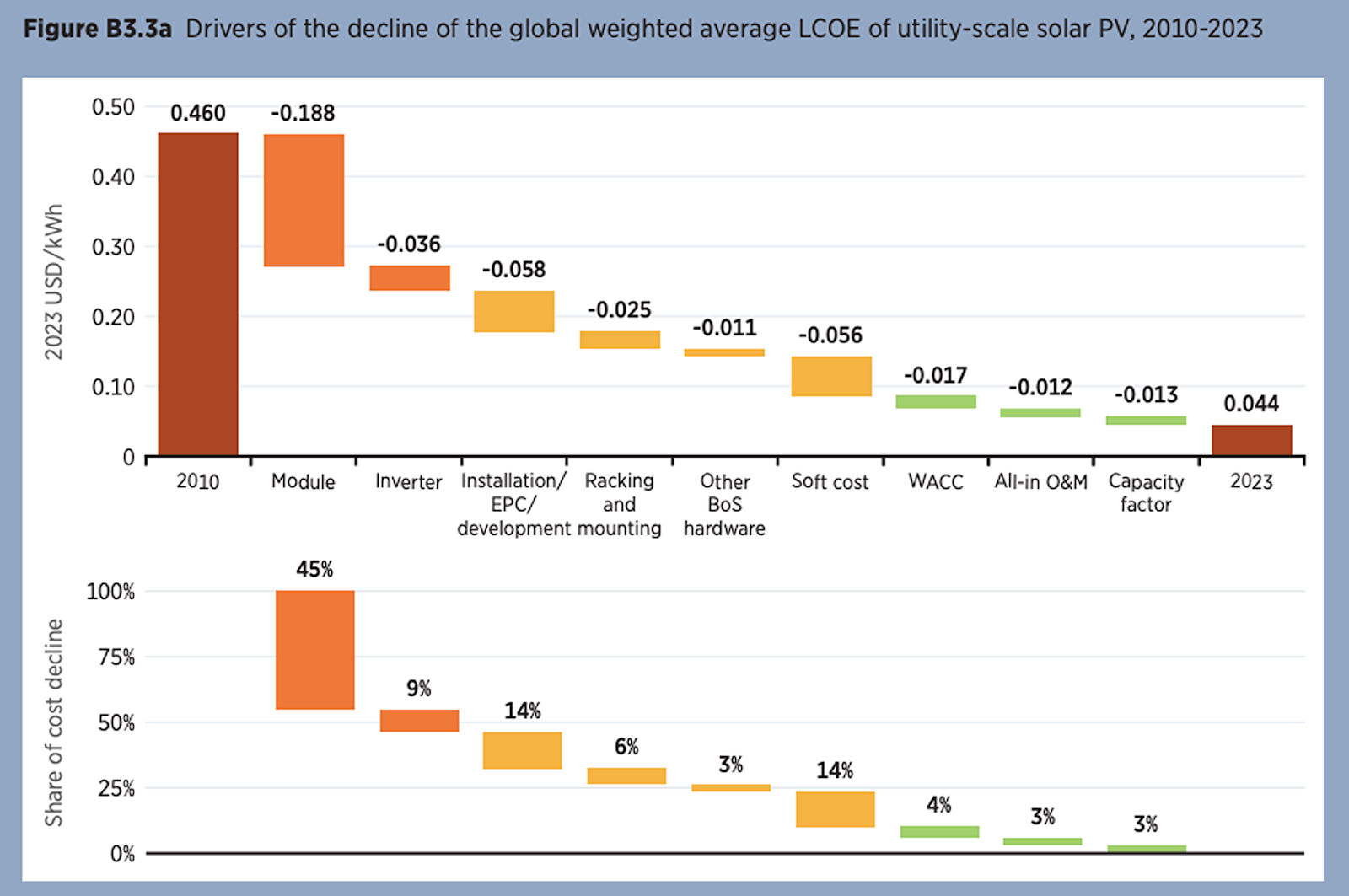
Take solar energy. Today it’s one of the clearest climate success stories, with costs falling by more than 90% over the past decade. But along the way, many solar manufacturers and installers collapsed under policy shifts, rising interest rates, and brutal competition. Companies like Sunworks and Titan Solar didn’t fail because solar itself was a bad idea. They failed because timing, financing, and execution matter just as much as technology.
Battery manufacturing tells a similar story. Northvolt was once seen as Europe’s answer to Asian battery giants, raising roughly $16 billion to build a homegrown supply chain. Scaling manufacturing at that level turned out to be brutally complex. When Northvolt filed for bankruptcy, some commentators framed it as proof that green tech doesn’t work. But a more honest reading is that building physical infrastructure at scale is hard, and every attempt teaches the next one where the cracks are.
Carbon removal has also had its share of painful lessons. Running Tide, a startup experimenting with ocean-based carbon removal, shut down after raising tens of millions of dollars. As a result, it landed on the front page of ClimateTech is Struggling news. But it is worth remembering that the failure wasn't wasted effort. It clarified what kinds of carbon removal approaches might be verifiable, scalable, and durable and which ones probably aren’t.
None of these stories mean the climate solutions themselves were pointless. They mean the path forward isn’t linear.
It’s tempting to see climate tech failures as a warning sign. But in reality, innovation has always worked this way.
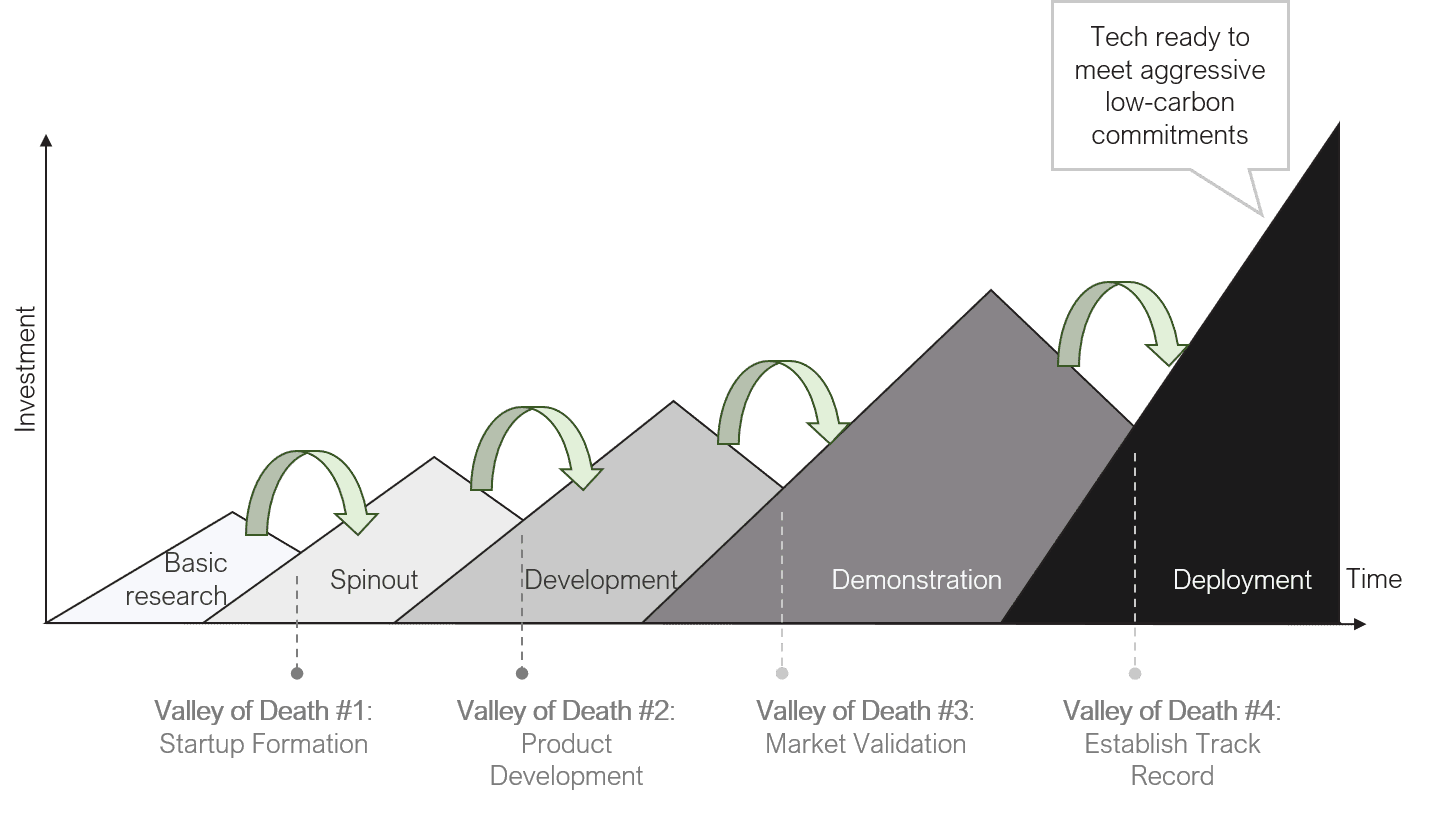
In the early 2010s, the first wave of “cleantech” investing collapsed spectacularly. More than 90% of companies failed to return capital, and investors retreated for years. At the time, it felt like a verdict on climate innovation. In hindsight, it was more like a crash course. That period taught the sector painful but valuable lessons: capital-intensive hardware needs patient financing, policy matters more than founders like to admit, and scaling from the lab to the real world is where most ideas break. Today’s climate tech ecosystem looks different precisely because those mistakes were made early. Failure also accelerates learning in a way success often doesn’t. When a startup struggles to scale batteries, electrolyzers, or carbon capture systems, the entire industry learns where supply chains break, where costs explode, and where assumptions are too optimistic. Those insights don’t disappear when a company shuts down. They flow into new startups, new funding models, and better policies.
And crucially, failure filters hype from substance. Climate tech has no shortage of bold claims. Projects that don’t survive real-world constraints help redirect capital toward solutions that can actually work at scale. That’s not cynicism, instead that’s market maturity.
It’s easy to get stuck on individual failures and miss the broader trend. When you zoom out, the trajectory of climate tech is unmistakably forward.
Renewable energy deployment keeps hitting record highs globally. Electric vehicles continue to grow as a share of new car sales. Grid-scale battery storage is expanding faster than many analysts predicted a few years ago. These gains didn’t come from a single perfect company or flawless technology. They came from thousands of experiments, many of which failed quietly along the way.
Even technologies still struggling today, like direct air capture, are advancing through iteration rather than instant success. Companies like Climeworks have faced layoffs and criticism, but they’ve also pushed carbon removal from theory into physical infrastructure that can be tested, measured, and improved. That alone is a meaningful step.
There’s a strange comfort in realizing that failure is normal. It means the climate tech space isn’t stuck in ideas but actively testing them against reality.
It also means investors, policymakers, and founders are getting better at asking the right questions. Instead of “Is this climate solution visionary?” the focus is shifting toward “Can this scale?”, “Can this survive market cycles?”. A climate tech ecosystem that never fails is one that never tries anything ambitious. A climate tech ecosystem that fails, learns, and adapts is one that has a fighting chance.
If reading about failed climate solutions makes you feel discouraged, that reaction makes sense. The climate crisis leaves very little emotional room for disappointment.
But the healthier response is this: failure is evidence that the transition is underway. We are no longer just talking about climate solutions, we’re building them, stress-testing them, and, yes, sometimes watching them fall apart. Failure doesn’t cancel progress. Failures sharpen it with every setback helps narrow the field toward solutions that are not only cleaner, but also cheaper, tougher, and more resilient.
That’s how real change happens.
Want to learn more?
Get updates on climate progress and how you can help.