Is carbon capture a viable solution to climate change?
Carbon capture technology promises to remove CO₂ from the air, but is it viable? Learn about direct air capture costs, current capacity, innovations, and whether carbon capture can actually help solve climate change in 2025.
There's a technology that promises to vacuum carbon dioxide directly out of the air and bury it underground forever. Sounds perfect, right? Just build enough of these machines, keep burning fossil fuels, and we're golden.
Except it's not that simple. Not even close.
Carbon capture technology (specifically Direct Air Capture and Carbon Capture and Storage) has become one of the most debated climate solutions. Some see it as essential for reaching net-zero emissions. Others call it an expensive distraction. The truth sits somewhere more nuanced, and honestly, more interesting than either extreme suggests.
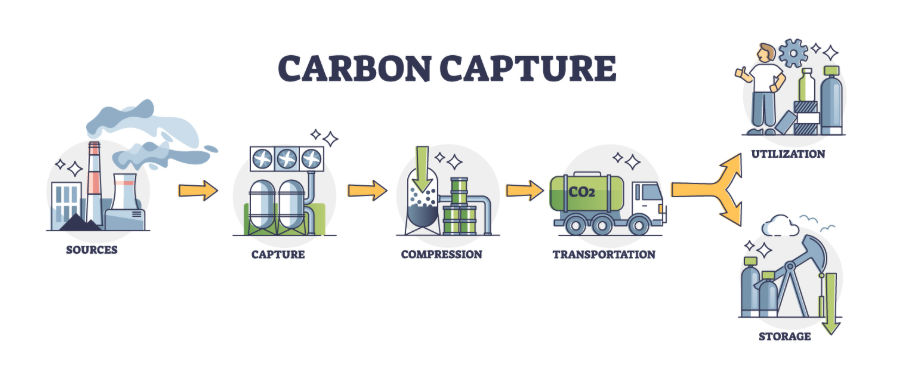
Current Carbon Capture Capacity: Where We Actually Are
Let's start with reality: carbon capture technology is still tiny compared to the climate problem.
Right now, all the carbon capture facilities in the world combined remove about as much CO₂ as taking a few thousand cars off the road. Meanwhile, we're emitting the equivalent of over a billion cars. The scale gap isn't just big. It's enormous.
The world's largest direct air capture (DAC) plant, Climeworks' facility in Iceland, removes roughly the annual emissions of 8,000 cars. That's genuinely impressive engineering. It's also a drop in the ocean compared to what climate scientists say we need. Experts estimate we'll need to remove billions of tons of CO₂ annually by mid-century to limit global warming. We're currently removing thousands of tons. That's roughly a million-fold gap.
More and more carbon capture facilities are being planned across the globe. Over a hundred carbon removal projects are currently in development. A massive direct air capture plant opening in Texas this year will capture more than ten times what the Iceland facility does. But even if every announced carbon capture project gets built, we'd still be capturing less than 5% of what climate goals require by 2030.

The question isn't whether carbon capture technology works (it does). The question is whether we can scale carbon removal fast enough and cheap enough to meaningfully address climate change.
Carbon Capture Cost: The Money Reality
Cost is where carbon capture technology hits its biggest obstacle.
Direct air capture costs currently range from $400 to $600 per ton of CO₂ captured. That might not sound terrible until you realize we need to remove billions of tons to address climate change. The math gets expensive fast.
Recent carbon capture innovations are encouraging. MIT researchers developed new technology in 2024 that could cut direct air capture costs by about 30%. Other research teams are working on materials that make the CO₂ capture process more efficient. The goal is to reduce carbon capture costs to around $300 per ton by 2030, maybe even $100 per ton eventually.
But here's the reality check: even at dramatically lower costs, removing the amount of CO₂ we need would still cost hundreds of billions of dollars annually. That's the economic output of entire countries, every single year. For comparison, preventing emissions through renewable energy is much cheaper than carbon removal. Solar and wind are now the cheapest forms of electricity in most places. It costs far less to not emit CO₂ in the first place than to capture carbon dioxide after it's already in the atmosphere.
That doesn't mean carbon capture is useless. It means the economics point toward cutting emissions first and using carbon capture for what we can't eliminate.
Carbon Capture Energy Requirements: The Catch-22
Here's something that doesn't get enough attention: running carbon capture machines requires massive amounts of clean energy.
If that energy comes from fossil fuels, you're burning carbon to capture carbon, which defeats the purpose. Carbon capture needs clean energy to work. We’ve seen what happens when that balance doesn’t work. The much-promoted idea of “clean coal” relied on capturing emissions from coal plants, but the process required so much additional energy and cost that it never became widely viable. In many cases, it made more sense to replace coal with renewables altogether.
And that’s the real tradeoff: that same clean energy could be used to replace fossil fuel power plants instead, which would prevent more emissions.
Think of it this way: you have a limited amount of solar and wind power to work with. You could either use it to shut down coal plants (preventing emissions) or use it to run capture machines (removing emissions). In most cases, preventing emissions with that clean energy does better. This doesn't mean carbon capture is worthless. It means the priority matters. First, use renewables to replace fossil fuels. Then, once you've done that, use any excess clean energy for carbon removal. Doing it backwards is inefficient.
The good news? We're getting much better at generating clean energy, and more and more of it is being deployed every year. As renewable capacity grows, using some for carbon capture becomes more feasible.
Where Carbon Capture Technology Actually Makes Sense
Despite the challenges, carbon capture isn't a dead end for climate solutions. There are specific applications where carbon removal technology is genuinely necessary.
Some industries are extremely hard to clean up. Making cement, for example, releases CO₂ not just from burning fuel but from the chemical process itself. Steel production has similar challenges. These sectors account for roughly a third of global emissions, and we don't have good alternatives for many of them yet.
That's where carbon capture shines. Several cement and steel plants have successfully added capture systems that grab CO₂ right at the source, where concentrations are high and capture is cheaper. Norway opened the world's first large-scale cement plant with carbon capture last year. China launched its first cement capture facility too. These aren't experiments. They're operating commercial facilities.
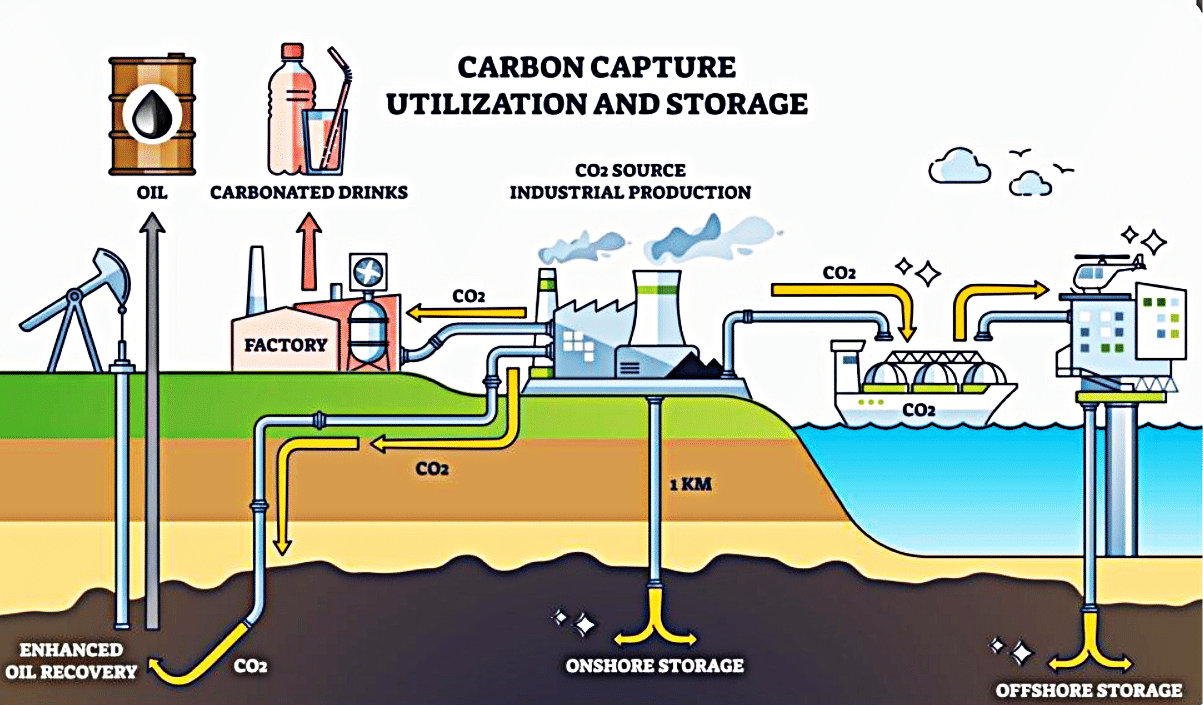
Aviation and shipping are other areas where carbon capture could help. Batteries don't work well for long-distance flights or massive cargo ships. Some companies are using captured CO₂ to create synthetic fuels for these hard-to-electrify sectors. It's niche, but potentially valuable.
And eventually, once we've eliminated as many emissions as possible, we'll still have CO₂ in the atmosphere from past emissions. That's where direct air capture becomes genuinely useful: as a cleanup tool for legacy carbon, not as a substitute for cutting emissions now.
Carbon Capture Innovation: Hopeful Developments in 2025-2026
Here's where things get more hopeful: the technology is improving faster than many expected.
Scientists at MIT just developed nanofiltration technology that could drop costs dramatically by making the capture process more efficient. Researchers in Australia are working on materials that can capture CO₂ using less energy. A Canadian company is testing systems that use waste heat from industrial processes to power carbon capture, solving two problems at once.
More and more creative approaches are emerging. Some teams are exploring enhanced weathering, essentially speeding up natural rock processes that absorb CO₂. Others are working on ocean-based removal systems. Biochar, which locks carbon in stable forms by burning agricultural waste in low-oxygen conditions, is gaining traction.
The technology is still early, but the pace of innovation is accelerating. What seemed impossible a decade ago is becoming routine. Costs that seemed fixed are dropping. More and more researchers and engineers are working on this problem, and that matters.
Investment is flowing too. While most money still goes toward renewable energy and batteries (which makes sense given they're more immediately impactful), carbon capture funding has grown substantially. More startups, more research, more competition. That's how breakthrough technologies get cheaper and better.
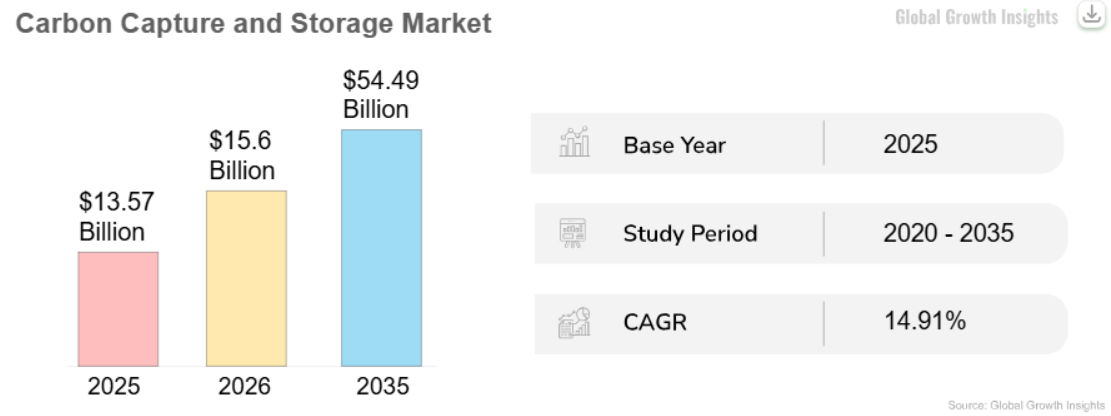
Carbon Sinks vs. Active Capture: Understanding the Options
Here's something that confuses people: we already have natural carbon sinks. Forests absorb CO₂. Oceans absorb CO₂. Soil absorbs CO₂. So why do we need expensive machines to do what nature already does?
The answer is scale and speed. Natural carbon sinks are absorbing billions of tons annually, but we're emitting even more. The math doesn't work. Forests can only grow so fast, and the good news is that global deforestation rates have declined compared to previous decades, and more restoration projects are underway. Still, in some regions trees are being cleared faster than they can recover, which limits how much carbon forests can absorb. Oceans are absorbing so much CO₂ that they're becoming more acidic, harming marine life. Soil can store carbon, but modern agriculture often releases it.
Natural sinks are crucial and we should absolutely protect and expand them. Reforestation, ocean conservation, regenerative agriculture; these all matter. But even if we maximize natural sinks, they won't be enough to offset continued emissions while also pulling down legacy CO₂ already in the atmosphere. That's where active carbon capture comes in: engineered systems that can work alongside nature at the scale we need.
This connects to something individuals increasingly encounter: carbon offsets. More and more companies offer you the option to "offset" your flight or purchase by paying extra. That money theoretically funds carbon removal, but the quality varies dramatically. Traditional offsets often fund tree planting, which sounds great but has problems. Trees take decades to absorb significant carbon, they can burn or get cut down, and many offset projects have been exposed as greenwashing, the trees weren't actually planted, or were going to be planted anyway.
Carbon removal credits tied to direct air capture or other permanent storage methods are different. When CO₂ is captured and stored underground in geological formations, it's removed for thousands of years. There's no risk of it being released back. These credits are currently more expensive (often $400-1,000 per ton vs. $10-50 for tree planting offsets), but they're also more reliable.
Should individuals buy carbon removal credits? It depends. If you’re offsetting an unavoidable flight or event, paying for high-quality, durable carbon removal can be a reasonable step especially if you’ve taken time to verify the credits.
Buying removal credits also sends a market signal. It tells companies there’s demand for credible, long-term carbon removal solutions, which can help scale better projects over time. At the same time, choosing lower-carbon options where possible sends an equally powerful signal that people want cleaner products, transport, and energy systems. Both choices shape the market in different ways.
For individuals, offsets can play a supporting role for emissions that are hard to eliminate. They work best alongside efforts to reduce emissions, not instead of them.
The bigger picture: carbon removal markets are growing, and more and more companies are purchasing credits to meet net-zero commitments. Individual purchases are tiny compared to corporate demand, but they signal that people care about this, which helps the industry scale. Just be very skeptical of cheap offsets that sound too good to be true, they usually are.
So, What's the Answer?
Carbon capture isn't a silver bullet, and it's not a scam. It's a real technology with real applications, just not the ones that get the most hype.
Think of it as a specialized tool, not a universal fix. But it can play a targeted role, especially for industrial emissions that are hard to eliminate. It may also help remove legacy CO₂ from the atmosphere once we’ve reduced most ongoing emissions, and it supports emerging solutions like sustainable aviation fuels. Offsets and carbon removal fit into that wider mix. Alongside clean energy, efficiency, electrification, nature restoration, and behavior shifts, they represent one piece of a much larger portfolio of climate solutions moving forward together.
The pattern emerging is clear: cut emissions dramatically through proven technologies like solar, wind, batteries, and efficiency. Then use carbon capture for the remaining emissions that are truly hard to eliminate, and eventually for pulling down atmospheric CO₂ concentrations.
More and more researchers, policymakers, and companies are converging on this view. Carbon capture is part of the solution: a supporting player, not the star. The main solution is still not putting CO₂ into the atmosphere in the first place. Technology will keep improving. Costs will keep dropping. The scale will keep increasing. The innovations happening now are genuinely encouraging. But counting on carbon capture to save us from making hard choices about emissions today is a gamble we probably can't afford to take. For simpler impactful actions, visit the actions section on climate invested.
The good news? We don't have to gamble. We have proven solutions that work now. Use those first. Let carbon capture develop into the role it's actually suited for: handling the hardest cases and cleaning up what we couldn't prevent. That's a realistic strategy, and honestly, a more hopeful one than betting everything on technologies that aren't ready yet.
Want to learn more?
Get updates on climate progress and how you can help.