
Buy products with sustainability certification when possible
sustainability certifications are a useful tool in making more informed, responsible purchasing decisions that contribute to climate action.
A sustainability certification is a document issued by accredited third-party organizations that evaluate and verify whether a product, service, or organization complies with specific environmental, social, and economic standards. Its main objective is to promote transparency, accountability, and continuous improvement in sustainable practices.
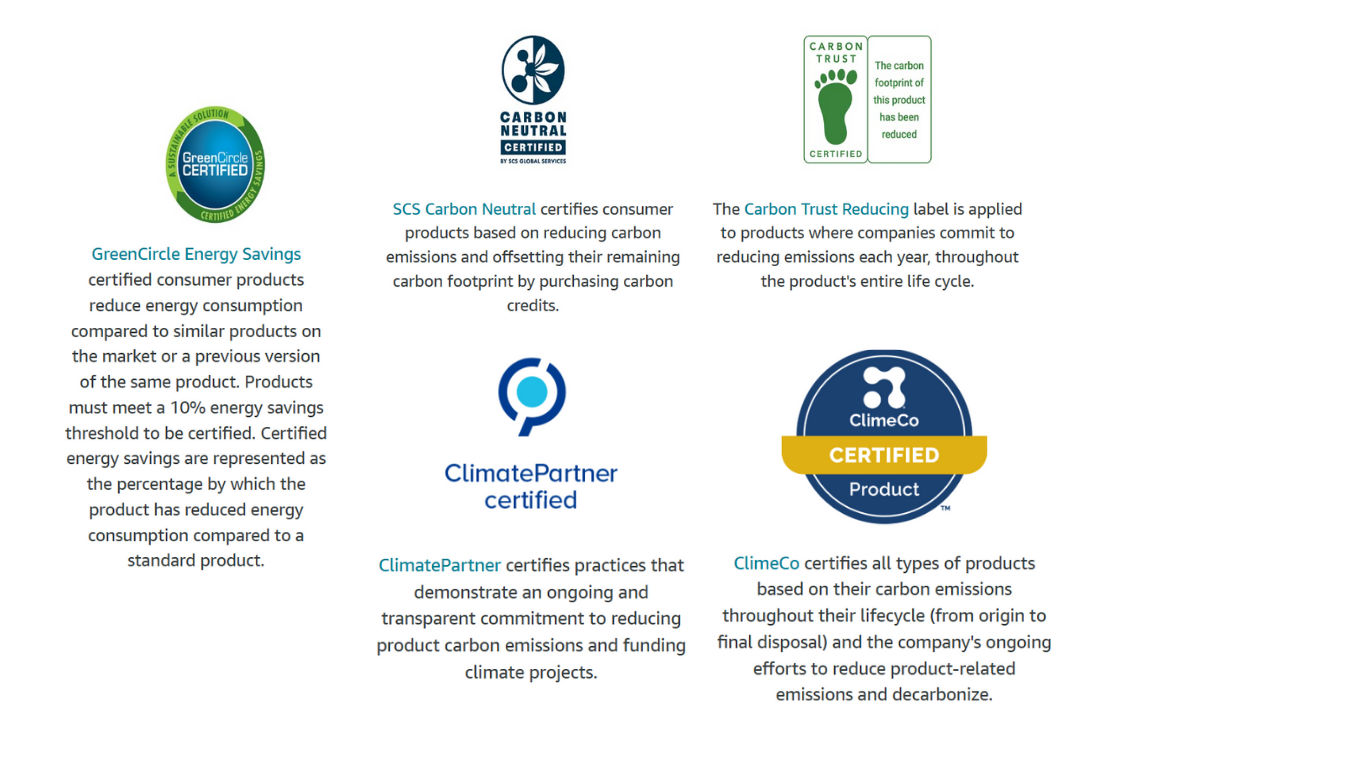
Examples of certifications used within the Climate Pledge Friendly program that focus on carbon footprint reduction and offsetting
These certifications can cover a wide range of aspects, such as carbon emissions, waste management, efficient use of resources, and labor practices. Obtaining a certification usually involves rigorous audits and ongoing compliance over time, ensuring that sustainability commitments are not just statements, but verifiable actions.
A widely recognized example is the ISO 14001 standard, which focuses on environmental management systems. This certification requires organizations to identify, manage, and reduce their environmental impacts, ensure legal compliance, improve resource efficiency, and reduce waste generation.
Certifications focused on carbon footprint
In recent years, certifications linked to the reduction of greenhouse gas emissions have gained increasing importance. Among them are initiatives such as Science Based Targets, the Carbon Trust Standard, and PAS 2060, SCS Carbon Neutral, which help organizations measure, reduce, and, in some cases, offset their carbon footprint.
The role of consumers and the lack of information
One of the main obstacles to responsible consumption is the lack of available information about the products and services we purchase. In general, data related to production processes, materials used, associated environmental and health impacts, waste generated during production, and the recyclability of products or packaging is often not accessible to consumers.
In response to this need for reliable information, different certification systems have emerged, enabling more informed and conscious purchasing decisions.
A concrete action: choosing certified products
One simple way to start becoming familiar with these certifications and to shop more sustainably is through Amazon’s Climate Pledge Friendly program. This initiative aims to help consumers identify more sustainable products by highlighting them with a leaf logo and is based on recognized third-party certifications, many of which are linked to carbon footprint reduction.

Example of a product identified with the ClimatePartner Certified label on Amazon
Choosing products with sustainability certifications will not solve the climate change problem on its own, but it is a concrete and accessible action to reduce our environmental impact. and just as importantly, it sends a message to sellers that these certifications are important to customers, which will help shift markets in general toward these practices.
Want to do more?
Get updates on climate progress and how you can help.