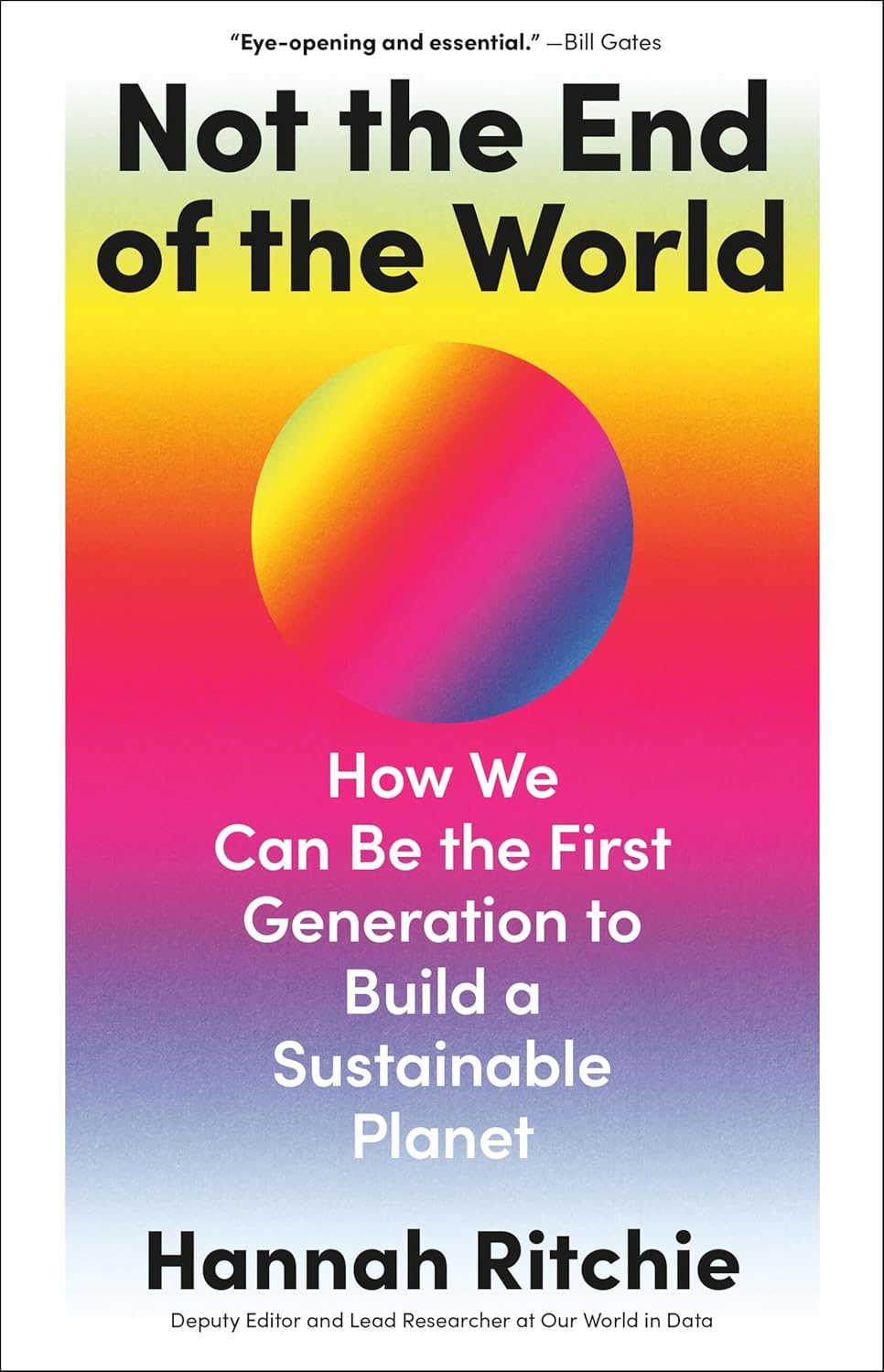
Not the End of the World - Hannah Ritchie
A book for anyone who finds it difficult to believe in a better future - THE TIMES. If you’ve already read Clearing the Air and enjoyed it, this book feels like the natural next step. While Clearing the Air focuses mainly on answering climate questions and cutting through common myths, Not the End of the World zooms out to the bigger picture. It’s less about a single issue and more about asking a broader question: how is the planet actually doing?
If you’ve ever spent 20 minutes reading climate news and suddenly felt like the planet is one bad Tuesday away from total collapse, you’re not alone. Between melting ice caps, plastic-filled oceans, and alarming headlines, it’s easy to think we’re already past the point of no return.
That’s exactly the mood Hannah Ritchie tries to reset in Not the End of the World.
Ritchie, a researcher at Our World in Data, spends her days digging through global data on climate, pollution, food systems, and biodiversity. And while she’s very clear that environmental problems are serious, she also shows that the situation isn’t nearly as hopeless as many headlines suggest.
The book walks through some of the biggest environmental problems: climate change, deforestation, air pollution, plastic waste, and food production. But instead of simply listing everything that’s going wrong, it focuses on something much more useful: what’s actually improving, and what solutions are already working.
And there is a lot of good news, and not just cherrypicked anecdotes. Renewable energy like solar and wind has become dramatically cheaper over the past decade. Air pollution has declined in many parts of the world. And the technologies needed to reduce emissions already exist, we just need to scale them faster.
A key concept Ritchie often comes back to is that two statements can both be true at the same time:
- Things are not good
- Things are better than they have ever been
This theme keeps coming back because in many areas, like air pollution, deforestation, and overfishing, things are much better than they were 50-100 years ago, even if they are problems today. Keeping this in mind makes sure that we can see both the urgency of the issue, but also the massive progress being made across the world.
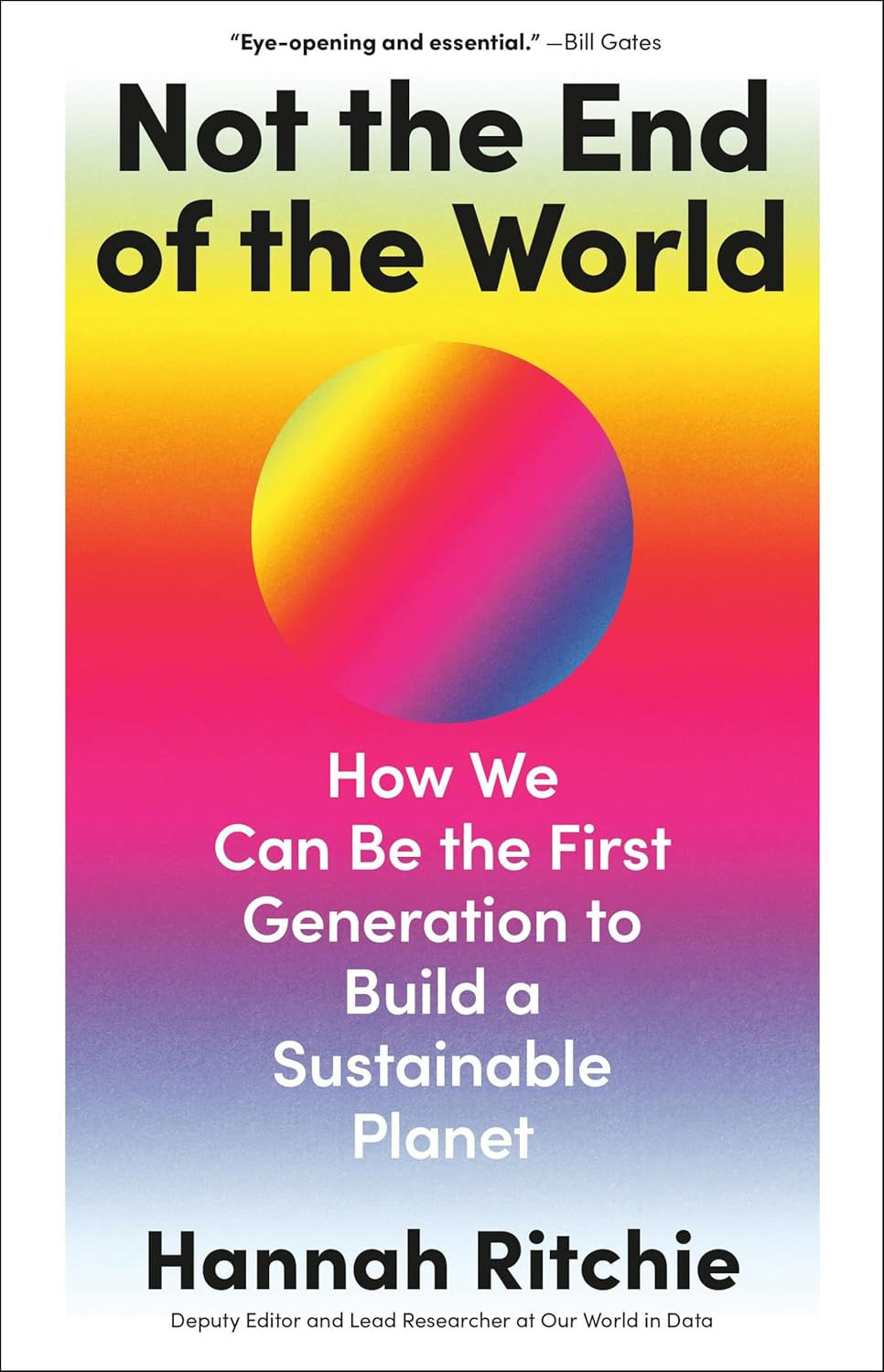
One of my favorite things about Not the End of the World is how readable it is while still being backed by lots of data and research. This isn’t a dense environmental textbook. It feels more like a thoughtful conversation with a very data-savvy friend who calmly explains the situation after you’ve spent too much time doom-scrolling.
It is also worth to note, the book doesn't pretend the problems are small or easy to fix. Instead, it reminds readers that progress and problems can exist at the same time - “The world is much better; the world is still awful; the world can do much better.”
If anything, Ritchie argues that realistic optimism is exactly what we need. People who believe the future is hopeless are less likely to support the policies, technologies, and changes that could actually solve the problem.
Get it on amazon here.
Want to learn more?
Get updates on climate progress and how you can help.