Why Believing Your Climate Actions Matter Is Itself a Climate Action
You can't always trace the ripple of your individual climate action but believing it matters makes you more likely to act, inspire others, and create the very change you hoped for. Here's the case for believing anyway and why it's not naive.
There's a strange feeling that comes with caring about climate change. You install solar panels, choose the electric vehicle, or eat a bit less meat. And then, late at night, a voice whispers: Does any of this actually matter, or am I just lying to myself? Can you prove that anything I’m doing will really make a difference? The honest answer is no. Not for sure.
This uncertainty bothers us. We want to see the direct line between our effort and the result. We want to know we are doing the right thing. But climate action rarely works that way. Your neighbor sees your rooftop solar and mentions it to a friend, who looks into getting panels, who installs them three years later. Did your panels cause that? Maybe. Maybe not. You'll never know.
But what if choosing to believe your actions matter, even without proof, is powerful in itself? Not wishful thinking, but something smarter. A way to protect your mental health while helping create the very change you hope to see.
Choosing the Belief That Helps You Act
Here's an idea that's been around for a long time: when you can't prove a belief is true or false, the best move is choosing the belief that serves you best. Some call this useful belief, and it fits perfectly with individual climate action.
Picture this: you're standing where two paths split. One path says your choices might create ripples you can't see. The other says they definitely don't matter. You can't prove either one from where you stand. But one path gives you power to act, purpose, connection. The other guarantees feeling helpless.
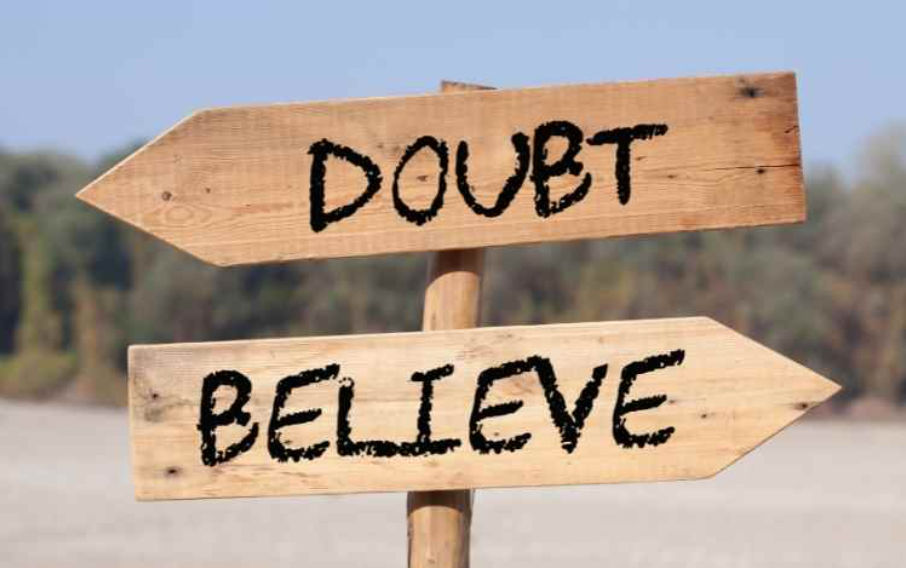
Believing your actions might matter gives you something tangible in return: improved mental health. Yes, climate action takes some time and effort. But people who engage with it, whether through personal changes or collective effort, have a stronger sense of purpose, better ability to cope with worry, and higher life satisfaction. The choice isn't between "free" and "costly." It's between action that builds resilience and defeatism that compounds anxiety. One belief channels your concern into agency. The other leaves you sitting with dread that has nowhere to go.
This isn't lying to yourself. It's seeing that when you can't prove which belief is true, the belief that helps you act beats the belief that makes you give up.
The research supports this idea as well: A 2025 study published in PNAS looked at over 15,000 U.S. youth and found that those who engaged in climate action whether individual changes or collective organizing, reported better ability to cope and higher life satisfaction, even when their worry about climate change stayed high.
The Changes That Started with Individual Choices
Here's the beautiful part: sometimes the ripples you can't prove turn out to be very real. Look at electric vehicles.
In 2010, buying an EV meant taking a leap of faith. You paid more for a car with limited range, few charging stations, and lots of people questioning your choice. You couldn't prove your purchase would help transform the market. You were just one person in what looked like a tiny movement.
But those early buyers created something none of them could see coming. Each purchase sent a signal to car makers: people want this. Each car on the road showed neighbors and coworkers that the technology actually worked. And as more people bought in, production costs fell, prices dropped, cars got better.
By December 2024, researchers could point to a real tipping point. Major markets have crossed the threshold where EV adoption becomes self-sustaining, meaning that even individual buyers choosing EVs create enough momentum (through falling prices, expanding infrastructure, and social normalization) that adoption accelerates without needing the same level of early-adopter enthusiasm. Each new buyer makes it easier for the next . In the UK, EV sales went from less than 1 in 100 cars in 2016 to one in three by 2023. Norway went from under 5% in 2013 to over 90% by 2025.

Those 2010 buyers couldn't prove their choices mattered. They acted on faith. And together, their individual purchases actually changed an entire industry.
The same thing happened with home solar panels. Early buyers in the 2000s paid high prices for panels many people dismissed as a power source that would never be able to compete. But their purchases created demand that supported innovation, which dropped costs by over 90% in two decades.
I think about this every time I see my neighbor's new solar panels. Two years ago, I installed mine, not because I could prove it would matter beyond my own roof, but because I chose to believe it might. Last month, she told me that seeing my setup made her finally take the leap she'd been considering. Now her coworker is getting quotes. I'll never know where that chain ends, if it ends at all.
The ripples you create might stay invisible to you. But invisible doesn't mean they're not real. And choosing to believe in them, even without proof, turns out to be one of the smartest things you can do.
The false choice between Between Personal Action and Systematic Change
There's an exhausting argument that keeps coming up: individual actions don’t matter, we need big systemic change. It’s true that big changes are needed, but every big change is made up of many small individual actions
This sentiment is not only misleading, it's draining. It leads to feeling like the only things you can do are meaningless, and you can’t control the part that matters. A more useful belief: Your individual actions matter BECAUSE we need systemic change.
Individual choices create the momentum that drives policy change. When thousands, then millions buy EVs and install solar, they're not just cutting emissions directly. They're making these choices normal, proving there's demand, and building support for climate-friendly policies. Political support doesn't appear out of nowhere. It grows from people who've changed their own lives and now want the system to make those changes easier for everyone.
The Power in Your Hands
I can't give you proof that your climate actions will create ripples you can see. The connections are too complex, the time frames too long, the links too hidden. But people who believe their actions do matter and who act on that belief report less climate anxiety and a stronger sense of purpose. They find others taking action. They inspire people in ways they never see.
And sometimes, when enough people share that belief, markets reach turning points. Technologies that seemed fringe became mainstream. What looked impossible starts looking likely.
While we're headed toward a future where many areas will face serious challenges, we're not in a situation where Earth will be unlivable. Acting now matters because big change takes time to build, and we're already moving in good directions to prevent the worst outcomes.
You have a choice. You can tell yourself that your actions don't matter and settle into feeling powerless. Or you can choose a useful belief. The one that says: I don't know if my actions will change the world, but believing they might give me power to act. The one that says: doing something beats doing nothing, even when I can't see all the results.
That belief is itself a form of climate action. Not because it guarantees success, but because it keeps you engaged in the kind of action that has already changed markets and might change much more.
Want to learn more?
Get updates on climate progress and how you can help.