What happens if we don’t hit 1.5°C - and why it’s still worth acting
Basically, the planet is warming faster than we hoped, and that 1.5°C line we talk about is getting uncomfortably close. We’re already seeing more record-hot days and weird weather, which is kind of the climate’s way of waving a red flag. It doesn’t mean it’s too late to act. It just means waiting around isn’t really an option anymore.
By now, you’ve probably heard the number 1.5°C tossed around in climate conversations like it’s some kind of magic line in the sand. Stay below it and we’re safe. Cross it and everything falls apart. That framing makes for a dramatic headline, but real climate science is a little more nuanced than that.
So let’s slow things down and talk honestly about what happens if we don’t stay under 1.5°C, why that’s a problem, and, just as importantly, why it’s still completely worth acting even if we miss that target.
First, what does 1.5°C actually mean?
The 1.5°C goal comes from the Paris Agreement, where nearly every country agreed to limit global warming to well below 2°C and ideally to 1.5°C above pre-industrial levels. Scientists didn’t pick that number at random. It’s based on decades of research showing that climate impacts get significantly more dangerous, more widespread, and harder to manage beyond that point. In other words, 1.5°C isn’t a cliff edge, it’s more like the start of a much steeper downhill slope.
Are we already past it?
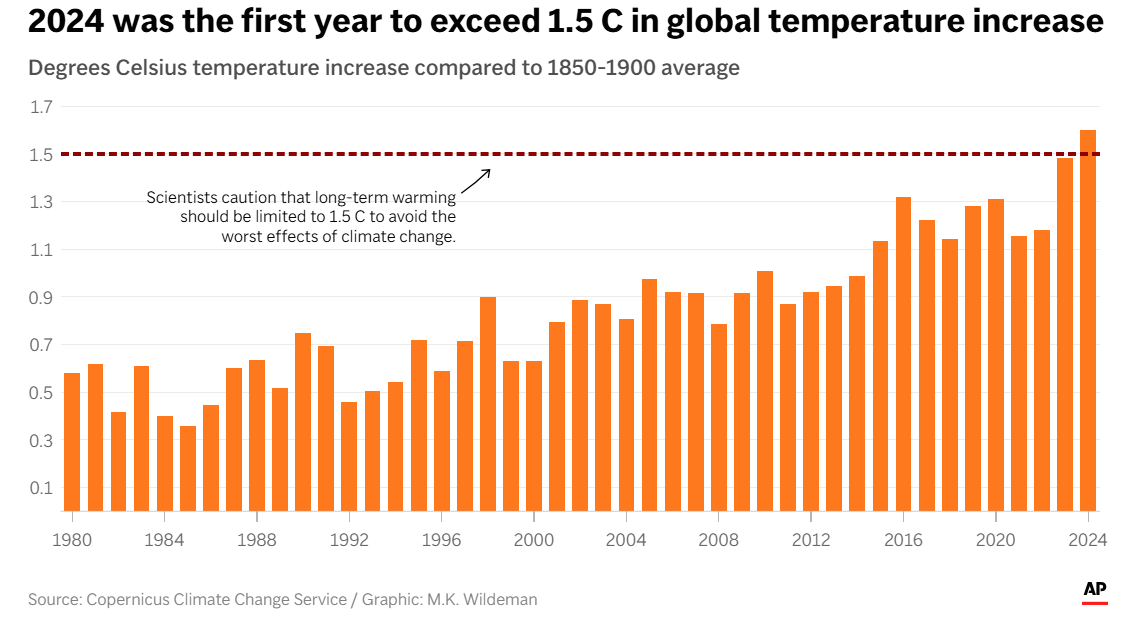
This is where things start to feel uncomfortable. Technically, climate targets are measured over long-term averages, not single hot years. That said, 2024 was the hottest year ever recorded, and some datasets showed global temperatures briefly exceeding 1.5°C above pre-industrial levels for the first time. Scientists have been clear that if current emissions trends continue, the world is likely to cross the 1.5°C threshold permanently sometime in the 2030s.
So no, it’s not officially happened yet, but we’re clearly getting close.
Why does missing 1.5°C matter so much?
At first glance, half a degree doesn’t sound like a big deal. After all, your daily temperature swings by way more than that. But climate systems don’t work like weather apps, and small global averages translate into massive physical changes.
As temperatures rise, heatwaves become more frequent, longer, and deadlier. What used to be considered extreme heat becomes normal in many regions, especially in South and Southeast Asia, the Middle East, and parts of Africa. This isn’t just uncomfortable, it directly affects human health, labor productivity, and mortality, particularly for outdoor workers and older populations. At the same time, warming intensifies the water cycle. Warmer air holds more moisture, which means when it rains, it rains harder. Meanwhile, evaporation increases, making dry regions even drier. As a result, floods and droughts become more severe at the same time, often in different parts of the same country. Agriculture suffers, water systems strain, and infrastructure built for a more stable climate starts to fail.
Then there’s the ocean. Coral reefs are one of the clearest examples of why 1.5°C matters. Scientists estimate that at 1.5°C of warming, 70–90% of coral reefs could be lost, but at 2°C, that figure jumps to over 99%. That’s not just an environmental tragedy, it affects food security, tourism, and coastal protection for hundreds of millions of people. In fact, researchers now believe that large-scale coral reef loss may already represent one of the first major climate tipping points to be crossed. Once ecosystems collapse at that scale, they don’t simply bounce back when temperatures stabilize.
And that’s where the real fear around exceeding 1.5°C comes in. Beyond certain thresholds, some changes become effectively irreversible on human timescales. Ice sheets melt, sea levels rise for centuries, and critical systems like ocean circulation weaken. The higher the temperature goes, the more likely we are to trigger these long-term shifts.
So is it game over if we miss 1.5°C?
This is where a lot of climate conversations go off the rails. Missing 1.5°C does not mean the planet is doomed or that climate action suddenly becomes pointless. Climate change isn’t a pass-fail exam. It’s a sliding scale of risk.
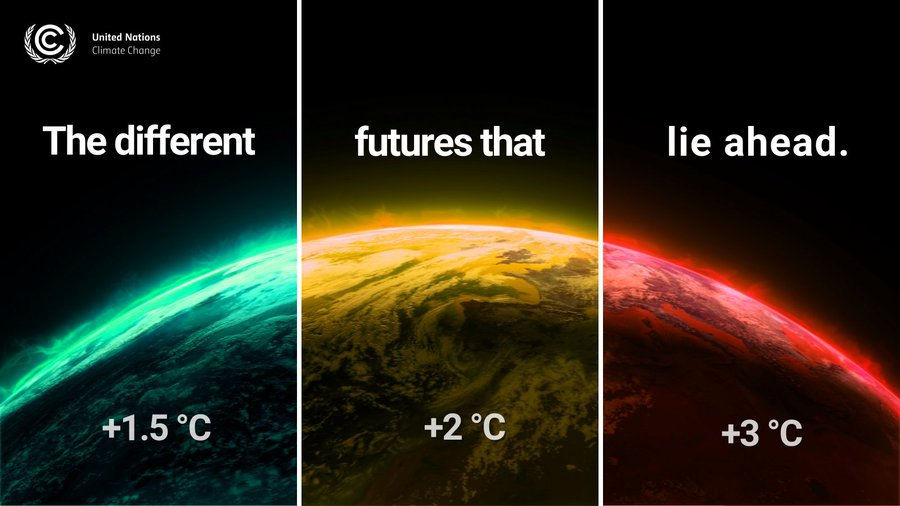
Every additional 0.1°C of warming increases damage, but the reverse is also true: every fraction of a degree we avoid still reduces harm. Limiting warming to 1.7°C instead of 2°C, or 2°C instead of 3°C, can mean fewer people exposed to extreme heat, fewer coastal cities flooded, and fewer ecosystems lost. That’s why scientists keep repeating the same message: effort still matters.
It is always still worth acting, especially now.
First, because the amount of warming we get depends directly on how much carbon dioxide we emit. There’s still a limited carbon budget left, and while it’s shrinking fast, cutting emissions now can still slow warming and prevent worst-case scenarios.
Second, because adaptation saves lives. Even in a warmer world, investments in flood protection, heat-resilient buildings, early-warning systems, and climate-smart agriculture dramatically reduce damage. These measures don’t require perfect climate outcomes, they help no matter where temperatures land.
Third, because climate action improves everyday life right now. Cutting fossil fuel use reduces air pollution, which lowers rates of asthma, heart disease, and premature death. Renewable energy also creates jobs, stabilizes energy prices, and reduces dependence on volatile global fuel markets. These benefits show up long before temperature curves flatten.
Giving up guarantees the worst outcomes. If the world collectively decides that missing 1.5°C means it’s no longer worth trying, warming doesn’t stop - instead it accelerates. The difference between a world that warms by 2°C and one that warms by 3°C or more is enormous, both in human and economic terms.
Missing the 1.5°C target would absolutely make the future harder. It would mean more extreme weather, more strain on food and water systems, and more irreversible damage to ecosystems we depend on. But it would not mean the end of meaningful climate action unless we choose to treat it that way.
Climate change isn’t about hitting a single perfect number. It’s about how much damage we allow and how much we prevent. And on that front, there’s still a huge amount we can influence. We’re already seeing meaningful progress: average carbon emissions per person peaked around 2012 and have since started falling, and nearly 80 % of the new power generation capacity added in 2024 came from renewable sources, not fossil fuels. Even long-term projections for future warming have come down over time as cleaner energy technologies scale and policies gain traction. That progress demonstrates that our actions do matter and that the more we do now, the better future outcomes we can achieve.
Want to learn more?
Get updates on climate progress and how you can help.