Don't worry so much about plastic packaging
Single use plastic is something, but it isn't a heavy contributor to climate change, and can actually help in a lot of ways, such as keeping food fresh for longer to reduce food waste. Also, most plastic in high income countries ends up in a landfill, which is not glamorous, but keeps it out of oceans and other animal habitats
Single-use plastic has become one of the most visible symbols of environmental harm. It’s the thing people point to when talking about wasteful consumption, overflowing landfills, and polluted beaches. And while there’s truth behind that concern, the conversation around single-use plastic is often far more simplistic than the reality. Plastic waste is a problem - but not in the way most people assume. And in some cases, single-use plastics actually help solve bigger environmental issues.
Understanding this nuance is important. If we want real progress on sustainability, we need to focus on where the biggest impacts actually are - rather than where public frustration happens to land.
Let’s start with climate impact. Yes, plastics are made from fossil fuels, and yes, manufacturing them creates greenhouse-gas emissions. In 2019, the global plastics lifecycle—from extracting raw materials to producing finished products—generated around 1.8 billion tonnes of CO₂ equivalent, or roughly 3.4% of total global emissions. That’s not nothing. But it’s also not the climate catastrophe many headlines make it out to be.
To put things in perspective, the global energy sector - electricity and heat - accounts for more than one-third of all emissions; transport, heavy industry, buildings, and agriculture also carry huge carbon footprints, so compared to these giants, plastics are a relatively small contributor.
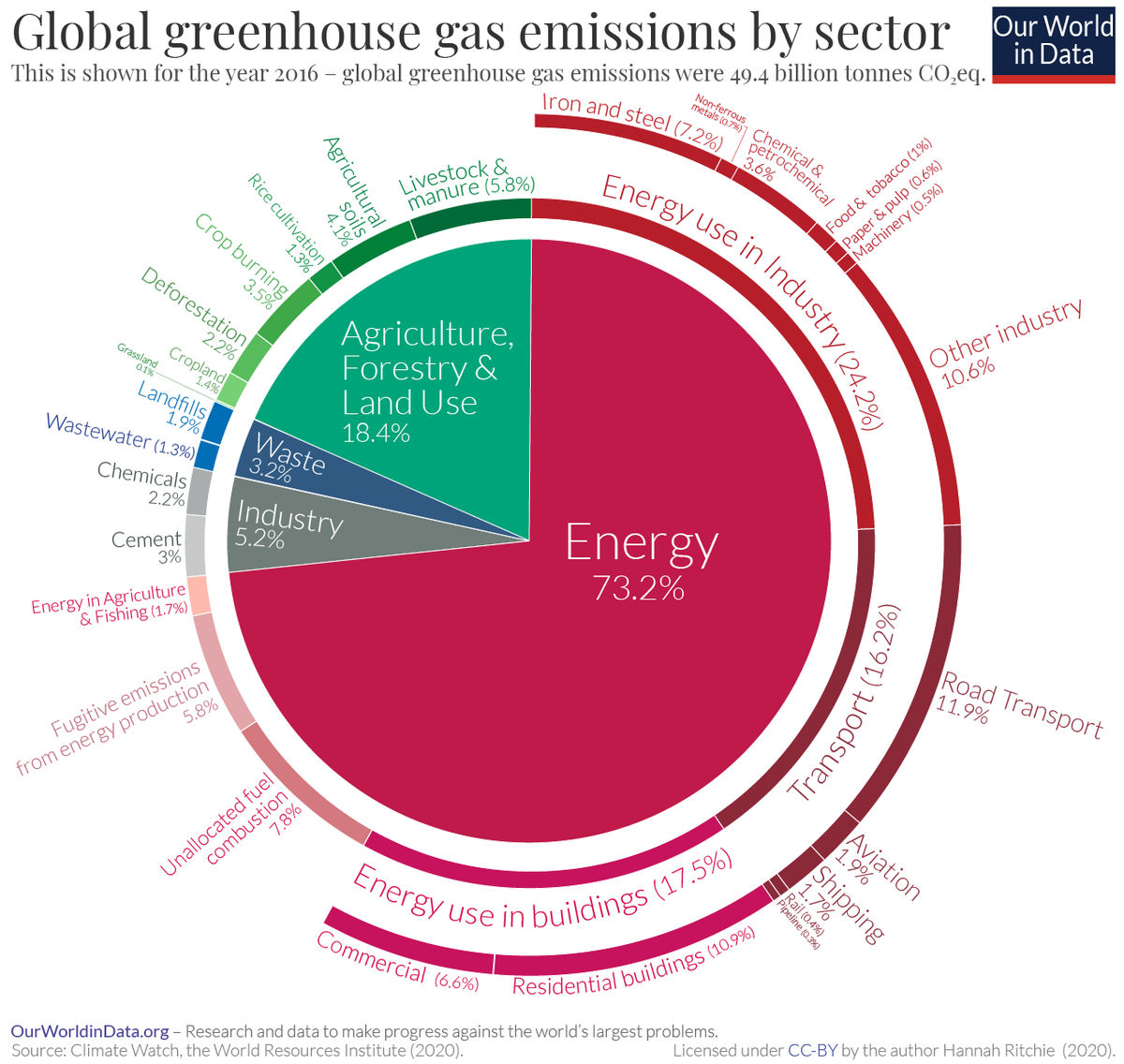
This doesn’t mean we should ignore plastic-related emissions. But it does mean that calling single-use plastic a major climate villain is misleading. If our goal is to reduce global emissions at scale, focusing solely on banning straws or plastic bags won’t move the needle nearly as much as decarbonizing the power grid, shifting transportation to low-carbon systems, or improving industrial efficiency.
Here’s where the conversation gets more interesting. One of the largest sources of avoidable greenhouse-gas emissions is food waste. Globally, wasted food accounts for 8-10% of emissions - which is more than plastic production by a long shot. This is because growing food requires huge amounts of land, energy, water, fertilizer, and transportation. When food gets thrown away, all those resources are wasted too. Additionally, food in landfills breaks down into methane, which is also a greenhouse gas.
This is where single-use plastics often make a surprising positive difference. Lightweight plastic packaging - think seals, films, trays, and wraps - can extend the shelf life of fresh produce, meat, dairy, and baked goods by days or even weeks, which in turn leads to less food spoils before people get a chance to eat it. For example, a cucumber wrapped in thin plastic film can last two to three times longer, plastic-sealed meat stays fresh significantly longer compared to butcher paper. In many cases, the emissions saved by preventing food from being wasted far outweigh the emissions required to produce the plastic packaging.
Of course, this doesn’t mean all packaging is good. Excessive, unnecessary, or poorly designed plastic packaging is still wasteful. But it does explain why plastic became the dominant material for food protection: it works exceptionally well, it’s lightweight, and it reduces spoilage. The key is to use plastic strategically - where it helps - and reduce it where it doesn’t add value.
The real problem with plastic isn’t the material itself - it’s what happens when it’s thrown away. In high-income countries, nearly all plastic waste ends up in engineered landfills or modern waste-management systems. These facilities are far from perfect, but they do a good job of containing waste and preventing leakage into the environment. As a result, wealthier countries contribute relatively little to ocean plastic pollution, even though they use a lot of plastic. The ocean plastic crisis overwhelmingly comes from mismanaged waste - trash that’s dumped in open landfills, left uncollected, thrown into waterways, or openly burned. This happens largely in regions without formal waste infrastructure. When plastic escapes into the environment, it becomes a long-lasting pollutant that harms wildlife, breaks down into microplastics, and spreads through rivers and oceans. But when it’s properly collected and contained, it poses far fewer risks to ecosystems. Helping poorer countries develop waste management systems can be far more impactful for ocean plastic than reducing plastic use, in addition to many other health benefits.
When we look at all of this together, we can see a more complete and realistic picture. Plastics do have environmental impacts, and those impacts shouldn’t be ignored. But plastics also provide real benefits that are often missing from public conversations. For one, their contribution to global climate change is relatively small compared to the major emitting sectors that dominate the world’s carbon footprint. They also help reduce food waste - an issue with a far larger climate impact than the emissions associated with producing plastic packaging. And most importantly, plastic only becomes pollution when it escapes into the environment, which is ultimately a waste-management failure, not an inherent flaw of the material itself.
None of this means we should continue using plastic carelessly. Reducing unnecessary plastic, improving recycling systems, and redesigning packaging to be more sustainable are all essential steps. But trying to eliminate plastic entirely, or treating it as universally harmful, can easily create more problems than it solves. A more thoughtful path forward is to cut back on plastic where better alternatives exist, use it intentionally where it provides clear environmental advantages - such as protecting food - and strengthen waste-management systems so plastic stays out of oceans and natural habitats. At the same time, encouraging reuse where it’s practical and convenient can further reduce waste without disrupting the benefits plastic currently provides.
The focus should be shifting away from guilt-driven decisions and focusing on actions that truly create meaningful impact. Instead of fixating on every piece of plastic you use, it’s far more effective to prioritize high-leverage habits - reducing food waste, choosing low-carbon meat, being mindful of energy use at home, and buying fewer, longer-lasting products when possible. These choices do more to reduce your environmental footprint than most plastic swaps ever will. And perhaps just as important, your actions can inspire others, for example, when your friends see you choosing public transit because it works for you, or simply talking about sustainability in a positive way, it encourages them to take their own steps. Individual impact grows exponentially when it spreads through conversations, shared habits, and community norms. By modeling practical, sustainable choices - not perfection - we can help create an environment where doing the right thing feels accessible, reasonable, and worth trying for everyone.
Want to learn more?
Get updates on climate progress and how you can help.