Why care about climate change over all the other issues?
With so many global issues, this explains why climate deserves attention and where your effort can matter most.
It is a fair question to ask. Your life is already full of high-stakes priorities that demand your attention right now. You have a monthly rent or mortgage that does not care about global temperature averages. You have a grocery bill that seems to climb every time you walk through the sliding doors. You have a job, a family, and perhaps a persistent "check engine" light that feels much more urgent than a melting glacier thousands of miles away. When people talk about climate change, it can often sound like a luxury concern. It feels like something you are supposed to worry about only after everything else in your life is perfectly stable.
In reality, it is often easier in the short term to simply focus on the immediate demands of daily life without worrying about the climate. However, for many, there is a persistent nagging feeling that surfaces when we see the weather shifting or read the news; a quiet, underlying anxiety that we might be part of the last generation to experience the world as we know it.
Addressing climate change isn't about adding another burden to an already full plate. It is about resolving that tension and ensuring that the life you are working so hard to build today actually has a stable future. Caring about this issue isn't an abstract act of charity; it is a way to quiet that existential dread and take an active role in making sure the story doesn't end with us.
A Different Kind of Responsibility
Rather than being just another problem on a list, the climate crisis often feels like a background hum; a nagging sense of unease that surfaces when we think about the future. It’s a unique weight because, unlike many global issues like foreign wars or poverty, our own lives are intrinsically tied to it. We recognize that simply living, traveling, and consuming in a modern society contributes to the problem, even if it isn't our fault.
This creates a specific kind of powerlessness. But you don't need to make climate advocacy your "front and center" focus to make a difference. Here is a better way to look at it:
- A Personal Connection:
Most major global crises would exist with or without us. Climate change is different because our individual presence has a footprint. This doesn't have to be a source of guilt; instead, it can be a source of personal responsibility; a desire to ensure that because we were here, the world ends up in a slightly better state.
- The Antidote to Doom:
That "nagging feeling" of doom usually stems from a lack of agency. Taking even small, specific actions; whether it's a lifestyle shift or a quick political message, acts as a practical antidote to that feeling. It moves you from being a passive observer of a "doomed" future to an active participant in a better one.
- Integration, Not Obsession:
You can help push the needle without it becoming your entire identity. It’s about finding a balance where your values and your actions align, allowing you to live your life fully while knowing you are part of the solution.
By taking these steps, you aren't just helping the planet; you are resolving that internal tension and reclaiming a sense of hope for the world you're helping to build.
The Next Great Economic Engine
There is a common fear that caring about the climate means giving things up. We are told we have to sacrifice our comfort or our standard of living to "save the Earth." This is a narrative that is increasingly out of step with the facts. The transition to a cleaner economy is actually the biggest economic opportunity of our lifetime. It is a massive project of building, inventing, and upgrading that will define the next fifty years of American industry.
Making choices that align with this transition isn't just about being "green"; it’s about choosing superior technology that works better for your daily life:
- Home Comfort and Savings:
Modernizing a home with high-efficiency insulation or a heat pump isn’t a sacrifice. It results in a quieter, more comfortable living space with consistent temperatures, while significantly lowering monthly utility bills. You aren’t "giving up" your heater; you are upgrading to a smarter system that saves you money.
- Performance and Convenience:
The shift to electric transportation is driven as much by performance as by policy. EVs offer instant torque and a smoother drive, but the real benefit is the convenience of never visiting a gas station again. Charging at home while you sleep is a quality-of-life upgrade that happens to be better for the air we breathe.
- Career and Investment Growth:
As trillions of dollars pour into the "Battery Belt" and renewable infrastructure, the most stable and high-growth career paths are moving toward these new sectors. Aligning your professional skills or your investment portfolio with this engine isn't an act of charity—it's a way to ensure you are positioned where the future of the economy is actually heading.
By leaning into these changes, you aren't just helping to solve a global problem. You are making the practical, self-interested choice to adopt better technology, lower your costs, and join the most productive era of growth in modern history.
According to the 2025 U.S. Energy and Employment Report, clean energy jobs are growing faster than the rest of the economy. These are high-quality, local jobs in manufacturing, installation, and engineering. They are jobs that cannot be easily automated or shipped overseas. When you care about the climate, you are rooting for the growth of a new American manufacturing base. You are supporting the "Battery Belt" in the Southeast and wind technicians in the Midwest. You are looking toward a future where we lead the world in the technology that everyone else is going to need. This is a story of abundance and innovation, not a story of lack.
Finding Your Own Lane
One reason people hesitate to care about climate change is that it feels too big to handle. If you care, does that mean you have to become an expert in atmospheric physics? Do you have to sell your car and never eat a hamburger again? The answer is a resounding no. The most effective way to care about the climate is to find where it intersects with the things you already love.
If you are a parent, your "lane" might be pushing for electric school buses so your kids do not breathe diesel fumes while they wait for the bell. If you are an outdoor enthusiast, your lane might be protecting the local trails and rivers you use every weekend. If you are a small business owner, your lane might be taking advantage of tax credits to make your building more energy efficient and lower your overhead costs. You do not have to do everything. You just have to do the thing that makes sense for your life.
The International Energy Agency's 2023 World Energy Outlook shows that the momentum behind clean energy is now unstoppable. We are no longer waiting for a miracle. We are simply in the middle of a major technological shift. Caring about this process means you are paying attention to the way the world is moving. It means you are positioning yourself and your community to benefit from that shift rather than being left behind by it.
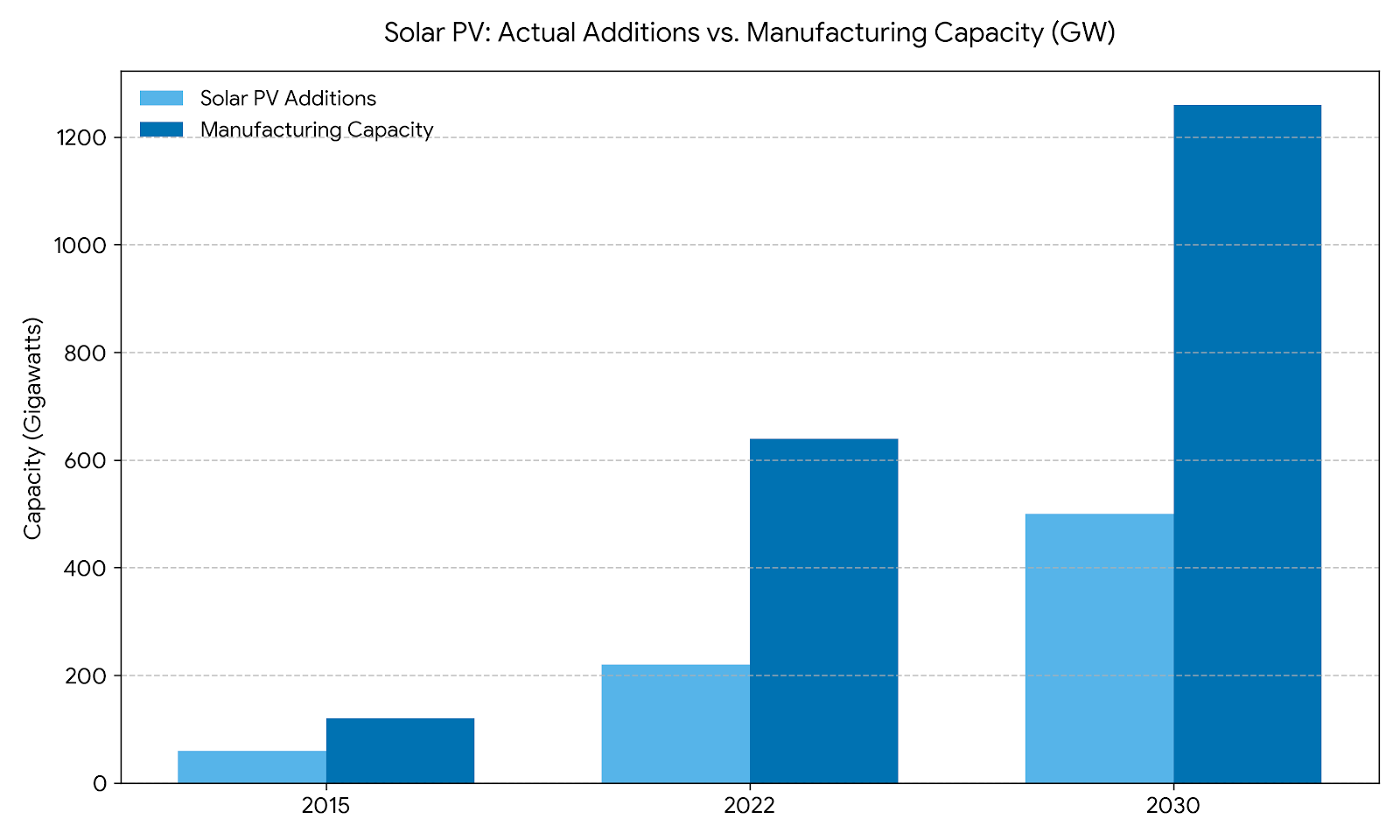
Renewables are set to contribute 80% of new power capacity to 2030, with solar PV alone accounting for more than half.
The Power of the "And"
We often think in terms of "either/or". We think we can either care about the climate or care about the economy. We think we can either care about the future or care about the present. But the most powerful word in the climate conversation is ‘‘and’’. We can build a more stable climate and make our homes more comfortable. We can invest in new technology and create millions of good jobs. We can protect our local environment and lower our monthly bills.
This is why you should care. Not because you are a bad person if you do not, but because you deserve a world that works better than the one we have now. You deserve a power grid that does not fail during a storm. You deserve a city that is not a "heat island" in July. You deserve to know that the hard work you are doing today is building a foundation that will actually hold up for your children. When you care about the climate, you are simply choosing to be an active participant in the design of your own future. You are taking your power back from the feeling of "doom" and putting it into the work of "what is possible".
The beauty of this perspective is that it turns a burden into a tool. Once you see the connection between the climate and your daily life, you start to see solutions everywhere. You stop feeling guilty and start feeling influential. You realize that while the problem is global, the agency is yours. You are part of the generation that gets to fix the broken parts of our system and replace them with something more resilient, more affordable, and more just. That is not just something to care about. That is something to be excited about.
Want to learn more?
Get updates on climate progress and how you can help.