Is divestment or investment more effective for climate change?
For a long time, there’s been a debate between divesting and investing. Neither is perfect on its own, but together they’re far more effective. The takeaway is simple: climate action isn’t about sounding right, it’s about moving money in ways that cut emissions fast.
If you hang around climate conversations long enough, you’ll hear the same debate pop up again and again: Should we focus on divesting from fossil fuels, or investing more in climate solutions?
On one side, divestment is framed as a moral stand to cut off money to polluters and let the system correct itself. On the other hand, investment is sold as the practical route, putting capital where it can actually build a low-carbon future. People argue passionately on both sides and honestly, there’s something to like in each approach. But climate change doesn’t really care about ideology. It cares about emissions going down. So the better question isn’t which side sounds better, but which one actually moves the needle.
What is divestment?
Divestment is basically financial pressure with a conscience. The idea is simple: if enough investors pull their money out of fossil fuel companies or carbon intensive companies, those companies lose capital, legitimacy, and political power. Over time, they either change or fade away.
And to be fair, divestment has achieved something important already as it shifted the conversation. Twenty years ago, oil and gas companies were just energy companies. Today, many of them are openly labeled as climate risks. Divestment campaigns helped make fossil fuels socially and politically uncomfortable. And momentum has definitely grown with over 1,400 institutions across 71 countries committed to fossil fuel divestment, representing roughly $39 trillion in assets at one point, driven by a broader divest and invest movement.
Universities, pension funds, and foundations announcing divestment also send a strong signal: this business model doesn’t align with the future we want. That reputational damage matters, especially in a world where public trust and brand value are real assets.
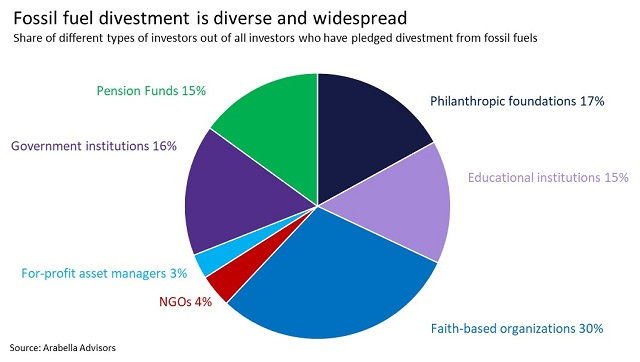
But here’s the uncomfortable part: selling shares doesn’t make a company disappear. It just changes who owns it. When large institutions divest, their shares are often picked up by private equity, hedge funds, or state-owned players who are even less transparent and far less sensitive to public pressure. So while divestment is powerful as a signal, on its own it doesn’t necessarily lead to fewer oil wells being drilled tomorrow.
The biggest limitation of divestment is that it’s indirect. You’re hoping market pressure eventually leads to behavior change, but you don’t control how long that takes or if it happens at all. In some cases, divestment can even backfire. When fossil fuel assets move into private hands, they often operate with fewer disclosure requirements and weaker climate commitments. The emissions don’t stop but they become harder to track. There’s also a timing issue. Climate change is “a right now” problem, not “a wait a few decades for capital markets to adjust” problem. We need massive emissions cuts this decade and frankly, divestment alone is slow.
That doesn’t make divestment useless. It just means it’s not a silver bullet.
How is investment different from divestment?
Investment, on the flip side, actually putting money into solutions is directly tied to lowering emissions at scale. This includes funding renewable energy, battery storage, green buildings, electric transport, climate-smart agriculture, and all other essential infrastructure that makes decarbonization possible. The advantage here is obvious: investment creates real things like solar farms get built; grids get upgraded; low-carbon technologies get cheaper and scale faster. This is how emissions actually go down in the real world.
We’ve already seen this play out. Solar and wind didn’t become competitive because fossil fuels were shamed into extinction. They became competitive because capital flowed in, innovation happened, and costs dropped dramatically. Recent global data shows investment in renewable energy and clean technologies is surging. In the first half of 2025 alone, investment in renewable energy reached approximately $386 billion, up roughly 10% from the previous year and total energy investment is expected to hit about $3.3 trillion, with about $2.2 trillion going to low-carbon technologies like renewables, grids, batteries, and efficiency. Investment also acknowledges a reality people don’t always like to admit: we’re still living in a fossil-fuel-dependent system. Transitioning away from it requires financing the transition, not just condemning the old model.
That said, not all climate investment is created equal. There’s a version of this story that’s mostly marketing. Slapping green on a fund doesn’t mean it’s driving real impact. Some investments slightly reduce harm without actually changing the system. Others just reshuffle assets that already exist.
There’s also the risk of avoiding the hard stuff. It’s easier to fund shiny new clean tech than to invest in decarbonizing steel, cement, shipping, or aviation. But those hard-to-abate sectors are exactly where emissions are hardest to cut and where capital is most needed. Investment works best when it’s intentional, so the question isn’t just “Is this green?” but “Does this help reduce emissions at scale, fast?”
This is where things get interesting. Some investors choose a third route: stay invested, but actively push companies to change. This means voting at shareholder meetings, engaging more with the company, filing climate resolutions, and tying executive pay to emissions targets. Engagement doesn’t sound as clean or satisfying as divestment. As its progress can be slow. But in some cases, it has delivered concrete results: better disclosures, science-based targets, and actual transition plans. Of course, engagement only works if investors are willing to walk away when companies refuse to change. Otherwise, it becomes an excuse for doing nothing while claiming influence.
Which one is more impactful?
If we’re being honest, it’s not about picking one of divestment or investment. It’s how they’re used together.
Divestment is effective at changing norms, narratives, and legitimacy. It tells the world which business models no longer make sense. It creates pressure and draws lines. Investment is effective at changing reality. It builds alternatives, lowers costs, and accelerates deployment at the speed climate action actually requires. Used strategically, they reinforce each other. Divestment without reinvestment leaves a vacuum. Investment without boundaries risks funding half-measures and greenwashing.
The most effective climate strategies tend to do three things at once: divest from the worst offenders with no credible transition plans, actively engage where change is still possible, and aggressively invest in solutions that scale. Climate change won’t be solved by symbolic gestures alone, nor by blind optimism in green markets. It will be solved by moving money away from models that lock in emissions and toward systems that make a low-carbon world inevitable.
What can I do?
If you want to do something about it, here are what you can start with
- Check where your money currently sits: Many major banks still finance fossil fuel projects, so understanding your bank’s climate stance is a first step. Tools like Bank.Green or Get a better bank can help you assess a bank’s fossil fuel exposure and climate commitments.
- Switch to a climate-friendly bank: Open an account with an institution that refuses to finance fossil fuels or supports renewable energy sends a clear market signal and redirect your financial footprint toward greener outcomes.
- Tell your old bank why you left: Writing or calling to explain that you’re moving your money for climate reasons reinforces consumer demand for responsible policies.
- Engage your people: Share that action with friends or family or take public pledges to move your money as collective individual pressure helps build broader demand for climate-aligned banking.
Want to learn more?
Get updates on climate progress and how you can help.