How next generation geothermal could change the game for clean energy
Traditionally, geothermal energy was only viable in specific areas where conditions are perfect, like in Iceland where there are natural hot reservoirs. However, a new approach is emerging that unlocks this power source almost anywhere. The catch is that it requires deep drilling, nearly 5-7 km, to access heat pockets deeper in the ground. While this technology is still new and still developing, it is very promising since it not only provides continuous baseload power, but is an opportunity to bring jobs to people in the oil industry.
The idea of "clean energy" usually brings to mind vast fields of blue solar panels or giant white turbines spinning in the wind. These are incredible tools, but they have a famous limitation. They depend on the weather. If the sun goes down or the wind stops blowing, we have to rely on batteries or other backup sources to keep the lights on. But what if we told you that the most powerful, consistent, and clean energy source on the planet is actually right beneath your shoes?
The Earth is quite literally on fire. At its core, our planet is as hot as the surface of the sun. Even just a few miles down, the rocks are hot enough to boil water and power entire cities. For decades, we have used this "geothermal" heat in a few lucky places like Iceland or Northern California where hot water naturally bubbles up near the surface. However, a new wave of technology is about to change everything. We are moving from "finding" geothermal to "creating" it. By drilling deeper than we ever have before, we are unlocking a 24/7 clean energy source that can work almost anywhere on the map.
How Enhanced Geothermal Systems (EGS) Work
Traditional geothermal energy is a bit like a natural spring. To make it work, you need three things to happen at once: hot rocks, water, and enough cracks in the rock for that water to move around. If you are missing even one of those ingredients, the project fails. This is why geothermal currently only provides a tiny fraction of our global electricity. It has been limited to volcanic regions or tectonic plate boundaries where the Earth's heat is easy to reach.
Next-generation geothermal, often called Enhanced Geothermal Systems (EGS), throws out the requirement for "natural" water and cracks. Instead of searching for the perfect underground reservoir, engineers are learning how to build one. If the rock is hot but dry, we can drill down, create our own network of tiny fractures, and then circulate water through them. The water picks up the heat from the deep rocks, comes back to the surface as steam, and spins a turbine. This shift moves geothermal from a "niche" energy source to a universal one. It turns the entire crust of the planet into a potential power plant.
The scale of this resource is hard to overstate. According to the U.S. Geological Survey (USGS), there is enough potential in the Great Basin of the U.S. Southwest alone to provide 135 gigawatts of power. This is not just a theoretical dream. The first large-scale commercial EGS project in the United States is scheduled to come online in June 2026.
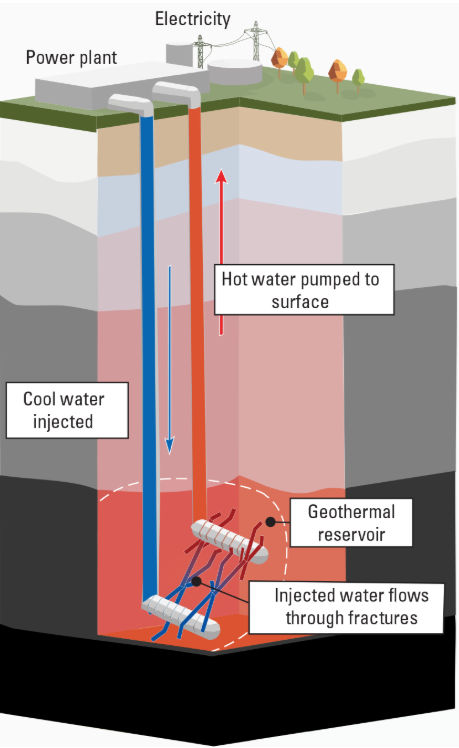
The Challenges of Deep Geothermal Drilling
The catch is that the "good" heat is usually very deep. While traditional wells might go down a kilometer or two, next-gen geothermal requires us to go much deeper. We are talking about depths of five to seven kilometers, which is roughly three to four miles. At these depths, the pressure is immense and the temperatures can reach over 200 degrees Celsius.
Drilling this deep is not just a matter of having a longer drill bit. It requires new materials that can survive the heat without melting or becoming brittle. It also requires advanced sensing technology to "see" what is happening miles underground. This is where engineering really gets exciting. Companies like Quaise Energy are moving away from mechanical bits entirely. In July 2025, they successfully demonstrated "millimeter wave" drilling, which uses high-energy beams to vaporize rock. This technology aims to reach depths that were previously impossible, effectively unlocking the heat of the deep crust.
Why Geothermal Provides 24/7 Baseload Clean Energy
In the energy world, "baseload" is the gold standard. It refers to power plants that can run 365 days a year, 24 hours a day, regardless of the season or the time of day. Coal and nuclear plants are baseload. Solar and wind are "intermittent." Because geothermal comes from the constant heat of the Earth core, it is the only clean energy source that provides true baseload power without needing expensive batteries.
This makes geothermal the perfect partner for solar and wind. Think of it as the steady heartbeat of the electrical grid. When the sun is shining, solar can do the heavy lifting. But when the sun sets, geothermal stays steady. This reliability is what makes it a "game changer". It allows us to fully retire old, polluting coal plants without worrying about blackouts or instability in the power supply. A 2024 report from the IEA suggests that geothermal could meet up to 15 percent of the global electricity demand growth by 2050 if we continue to scale these technologies. It is the missing piece of the puzzle for a 100 percent clean energy future.
Geothermal Energy Jobs for Oil and Gas Workers
Perhaps the most surprising benefit of next-gen geothermal has nothing to do with the environment and everything to do with the economy. For years, there has been a tension between the "green" economy and the traditional oil and gas industry. Many workers worry that a shift to clean energy means their skills will become obsolete. Geothermal energy flips that narrative completely.
The skills needed for next-gen geothermal are almost identical to those used in the oil and gas sector. If you know how to manage a deep-drilling rig, how to map underground reservoirs, or how to manage complex fluid systems, you already have the skills for geothermal.
This is an opportunity for a transition that actually works for everyone. We can take the infrastructure, the workforce, and the expertise of the fossil fuel era and repurpose them to harvest clean, eternal heat. Analysts at Wood Mackenzie noted that the geothermal industry flourished in 2024 precisely because the oil industry began to realize its potential. It turns a potential economic conflict into a massive opportunity for job growth in the same communities that have powered the world for the last century.
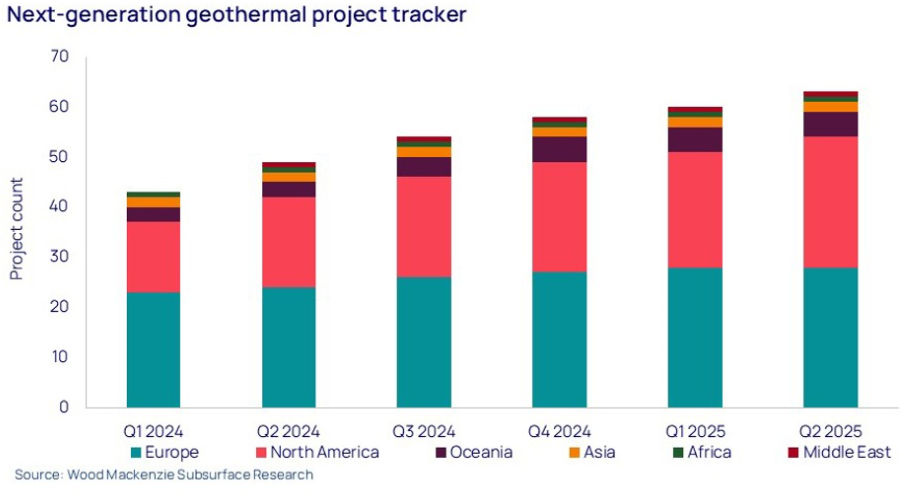
This chart illustrates the steady quarterly growth of next-generation geothermal projects from Q1 2024 to Q2 2025. Global activity has increased by approximately 46% in just over a year, rising from 43 active projects to more than 60. Source: Wood Mackenzie
The Future of Next-Generation Geothermal Energy
We are still in the early days of this revolution. There are major technical hurdles to overcome, and the initial costs of these deep wells are high. However, the momentum is building. The U.S. Department of Energy launched the "Enhanced Geothermal Shot" with a massive goal to reduce the cost of EGS by 90 percent by the year 2035. Private investors are also pouring billions into startups that are successfully proving these concepts in the field.
We often think of the transition to clean energy as a process of learning to live with less. We think about smaller cars, shorter showers, or "doing without." Geothermal offers a different vision. It is a vision of abundance. It suggests that we are living on top of an inexhaustible battery that has more than enough energy to power everything we do. We just have to be brave enough, and smart enough, to reach down and grab it.
Want to learn more?
Get updates on climate progress and how you can help.