How do you deal with feeling powerless?
Even if you are taking some climate action, its hard not to feel like you are taking on the world by yourself. Framing your thinking can help a lot here though
Feeling powerless - especially when you care deeply about big problems like climate change - is something many people struggle with. And that sense of being one person against a huge, complicated crisis can feel crushing. But it’s also a very human reaction. The important thing is to understand why that feeling often arises, why it doesn’t mean you’re powerless, and how shifting your mindset - and actions - can help you move from despair to something far more hopeful and grounded.
When we really start to see what’s happening with the planet - melting ice caps, shrinking habitats, extreme weather, loss of species - it can hit us hard. For a lot of people (me including), that understanding doesn’t just stay intellectual. It shows up in emotions: sadness, guilt, fear, powerlessness, sometimes even grief. There’s now a term for this: many researchers call it eco-anxiety or climate anxiety - emotional distress rooted in climate change and environmental degradation.
This kind of worry isn’t trivial or rare - it’s widely documented and deeply felt. Published on Lancet Planetary Health, an international survey of 16–25 year-olds across 10 countries found that about 60% said they were “very worried” about climate change, and nearly half said this anxiety affected their daily lives, including sleep, concentration, and mood. Many young people feel the burden more intensely because they expect to live longer with climate-related crises than their parents, leading to a sense of grief over the futures and environments they fear losing. Similar patterns appear in adult populations, where studies show that climate-related anxiety is strongly linked to higher levels of stress, depression, and overall psychological distress, highlighting that this is a shared human response to a very real global threat.
But here’s the important thing: feeling powerless doesn’t necessarily mean you are powerless.
It’s tempting to think that individual actions don’t count. The climate crisis is global, so what’s the point of changing a habit, recycling a little, or cutting down on meat consumption? But that’s a narrow, all-or-nothing way of seeing things - and for many people, it ends up making them shut down emotionally and feel even less capable.
A Journal of Environmental Psychology research suggests a more nuanced and hopeful picture. For many, climate anxiety is positively related to pro-environmental behaviours and engagement. In other words: those uncomfortable feelings about climate change - worry, grief, powerlessness - often motivate people to act rather than freeze. Emotion can be a source of energy, not just despair.
Importantly, this doesn’t mean action must be heroic or grand to matter. Small gestures, consistent habits, community-scale engagement - these accumulate. When numerous people each do what they can, the collective effect can be far larger than the sum of parts. Thinking of your emotions not as a burden but as a kind of compass - pointing you toward what matters to you, what’s worth protecting - can reframe “powerless” into “caring.” That matters because it fuels purpose.
One helpful mindset is to treat climate-related emotions as a signal - a sign that you care deeply about the world around you. Instead of seeing it as flaws or weaknesses, you can view them as proof that you haven’t numbed out. You’re paying attention, and you’re sensitive to real suffering and real risks. That sensitivity, when handled gently, can become the foundation for meaningful action at whatever scale feels sustainable to you. For some people, that might look like changing daily habits such as reducing waste, eating less meat, or choosing more sustainable transport. These actions may seem modest, but they build personal agency - the feeling that you are not helpless. And what’s often overlooked is that these actions don’t just shape your own mindset - they quietly influence the people around you. Even if you never talk about climate or sustainability, others notice how you live. A reusable cup, consistent recycling, choosing to bike, supporting greener brands - these small choices can spark curiosity, normalize different habits, and make sustainable behaviour feel more approachable for others. Change doesn’t only spread through speeches or campaigns; it also spreads through example. Your quiet consistency can be its own form of leadership. In that sense, your personal actions are not just about reducing your own footprint; they’re a ripple that moves outward, reminding others that small steps are possible, reasonable, and worth trying.
At the same time, trying to do everything alone can be exhausting. Thus, connecting with others - whether it’s close friends, community groups, student clubs, local climate organizations, or even just one person who also cares - can dramatically reduce that sense of isolation we might have. When people come together around shared concern, it becomes more powerful, confidence grows, and actions multiply. For example, when you have an honest conversation about climate anxiety you give someone else permission to speak up. One shared post, one community event can ripple outward and influence far more people than you might expect. That’s the quiet power of collective action - you’re not just acting for yourself, you’re modelling possibilities for others.
But that doesn’t mean we should throw ourselves into nonstop activism until burnout. Balancing action with self-care - giving yourself permission to rest, reflect, and recharge - is essential. For many, this means setting boundaries around news and social media intake, engaging in creative outlets or hobbies, and allowing space for hope and joy. For me, personally, it is taking a long walk in nature.
It also helps to remember that you’re not carrying this alone. Trusting that other people - friends, communities, activists, policymakers, scientists are also doing their part can ease the weight you feel on your own shoulders. No single person is responsible for solving the entire climate crisis. When you recognize that others are also contributing in their own ways, it becomes easier to step back when you need rest, without guilt or panic. That sense of shared responsibility makes your own effort feel more grounded, humane, and sustainable.
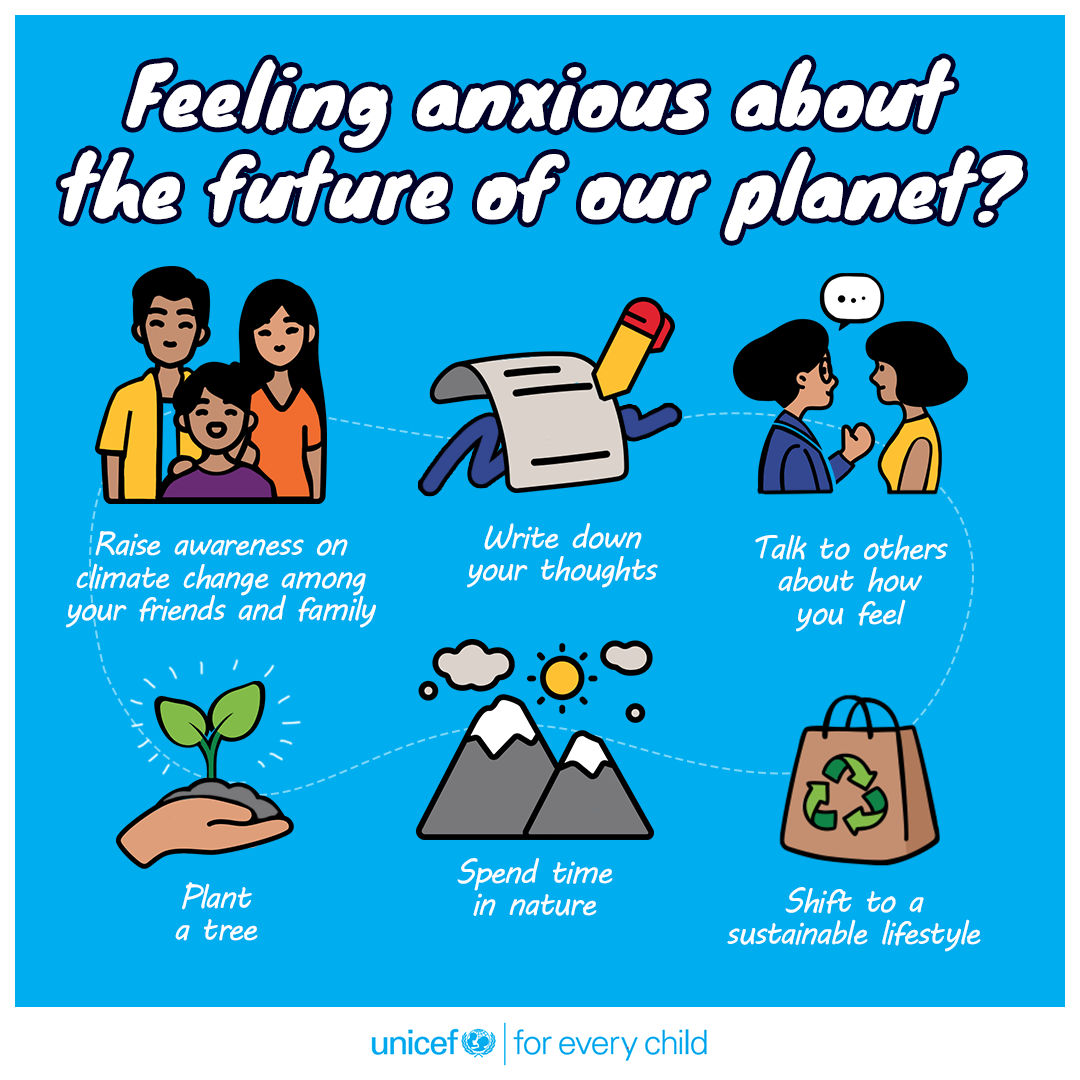
Sometimes, it helps to remember that acting with intention doesn’t have to be about solving the whole problem. It can just be about doing what you can - and accepting that’s enough for now. In the end, the most powerful thing might not always be a big action, but it can be quiet - a lived commitment.
Feeling powerless is real. But feeling powerless and doing nothing are two very different things. When many people choose to care, to act, even a very small action, those ripples can accumulate. Over time, it can become a wave, a bigger effect than any individual action could make.
So if you’re reading this and feeling the weight - know that you are not alone. And the fact that you’re asking these questions, thinking about impact is the start of something stronger than powerlessness. It might be the beginning of purposeful actions.
Want to learn more?
Get updates on climate progress and how you can help.