
Try working remotely one day a week
If your job allows it, working remotely is a great way to get more done by skipping the daily commute. Remote work took off when COVID hit, and many companies realized that people are just as productive remotely as in the office.
If your job allows it, working remotely — even just one day a week — can be a quiet game-changer. Skipping the daily commute doesn’t just save time; it gives you back a little piece of your day. When COVID hit, remote work suddenly became the norm, and to everyone’s surprise, many companies found that people were just as productive at home as in the office. Some even got more done — without the rush-hour stress, long drives, or constant interruptions.
I remember the first time I tried it. It wasn’t a grand experiment. It was just a Tuesday when traffic looked unbearable, and I decided to ask my boss to work at home instead. I made coffee, opened my laptop by the window, and somewhere between answering emails and hearing the birds outside, I realized how different the day felt — quieter, slower, somehow more mine. By lunch, I had finished more than I usually did by mid-afternoon at the office. There was something about the quiet and the lack of small distractions that made space for focus.
Working remotely one day a week might not sound like much, but it shifts more than just where you sit. There’s the obvious part: no commute, less gas, less time spent in traffic. There’s real data behind the difference, too. According to the NCTA, data from a two-week period in 2023 summer showed that about half of the American workforce was doing at least some work from home. During that same period, the Environmental Protection Agency recorded a significant drop in gasoline consumption — a change that translated into a massive cut in CO₂ emissions. It’s a small behavioral shift with an outsized environmental payoff.
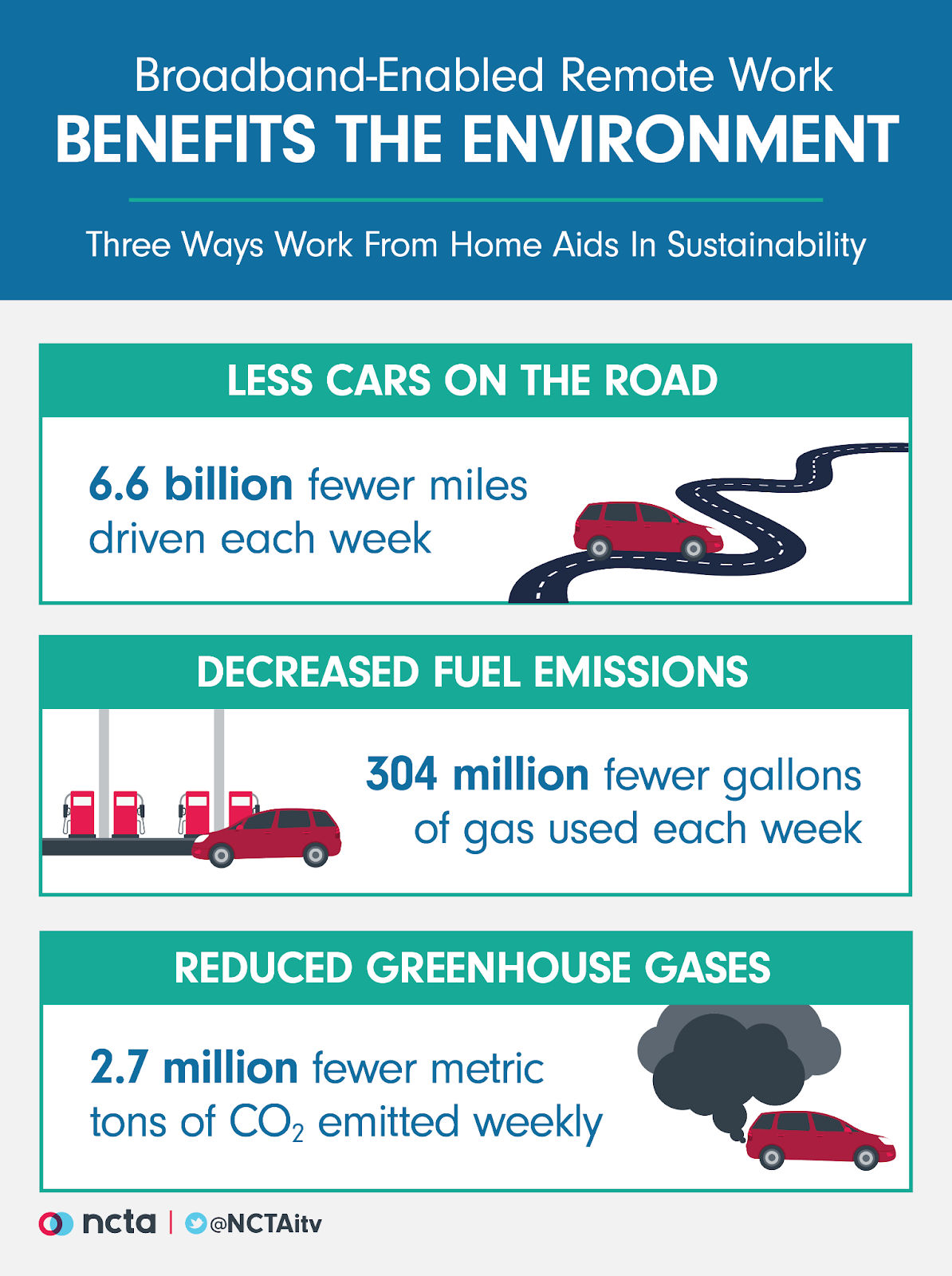
Of course, remote work isn’t for everyone or every role. Some people crave the buzz of collaboration or draw energy from in-person teamwork. But when it’s an option, even occasionally, it can make the week feel more balanced.
If it's something you’d like to try, the conversation doesn’t have to be complicated. The key is to approach it after you’ve shown consistency in your work and reliability in communication. And even better — if you’re still interviewing for a role, try to get a sense of the company’s remote culture early on by looking at job postings, benefits pages, or even asking casually how the team handles flexible schedules. When you bring it up, focus on how remote work supports the work, not just your personal preference. A few things help:
- Check the policy first: See if the company already has hybrid or remote days in place — it’s much easier to ask when there’s precedent.
- Choose the right moment: Bring it up during a 1:1 or after completing a project, when trust is already established.
- Frame the benefits in work terms: For example, “I’ve noticed I’m able to focus more deeply at home, especially on tasks that need extended concentration.”
- Suggest a small pilot: Something like one remote day per week for two or three weeks, with a check-in afterward to evaluate how it’s going.
- Be prepared to stay visible: Offer to keep your camera on for calls, send a quick daily update, or align on communication expectations.
It doesn’t need to be a big negotiation. It’s simply a conversation about what helps you do your best work — and starting small makes it easier for everyone to try.
Want to do more?
Get updates on climate progress and how you can help.