Switch to a sustainable or plant-based cat litter
Traditional clay cat litter requires strip mining, known for its destruction of carbon sinks and other environmental and health impacts. Luckily there are many alternative litters made of wood, plant fibres, paper and more that minimise climate impact without compromising on performance.
Your cat’s litterbox probably isn’t the first thing that comes to mind when thinking about climate-friendly household swaps, but it’s one of those everyday processes and products where the material choice makes a significant difference.
Traditional litter is usually made from bentonite clay, which is commonly extracted through strip mining. Strip mining has a host of negative ecological impacts: it damages ecosystems, soils and habitats, and removes carbon-storing vegetation. As with other forms of mining, excavation and transportation is energy-intensive. Not to mention, clay litter is associated with adverse health impacts for both cats and humans due to containing crystalline silica dust, a known carcinogen.
Historically, clay litter has been the standard because it’s affordable and easily produced while having clumping and odor-control properties. Fortunately, there are now lots of alternative litters available with none or little of the same impact and many of the same benefits. It’s a fast-growing area of innovation. The chart below shows the most common of these materials.
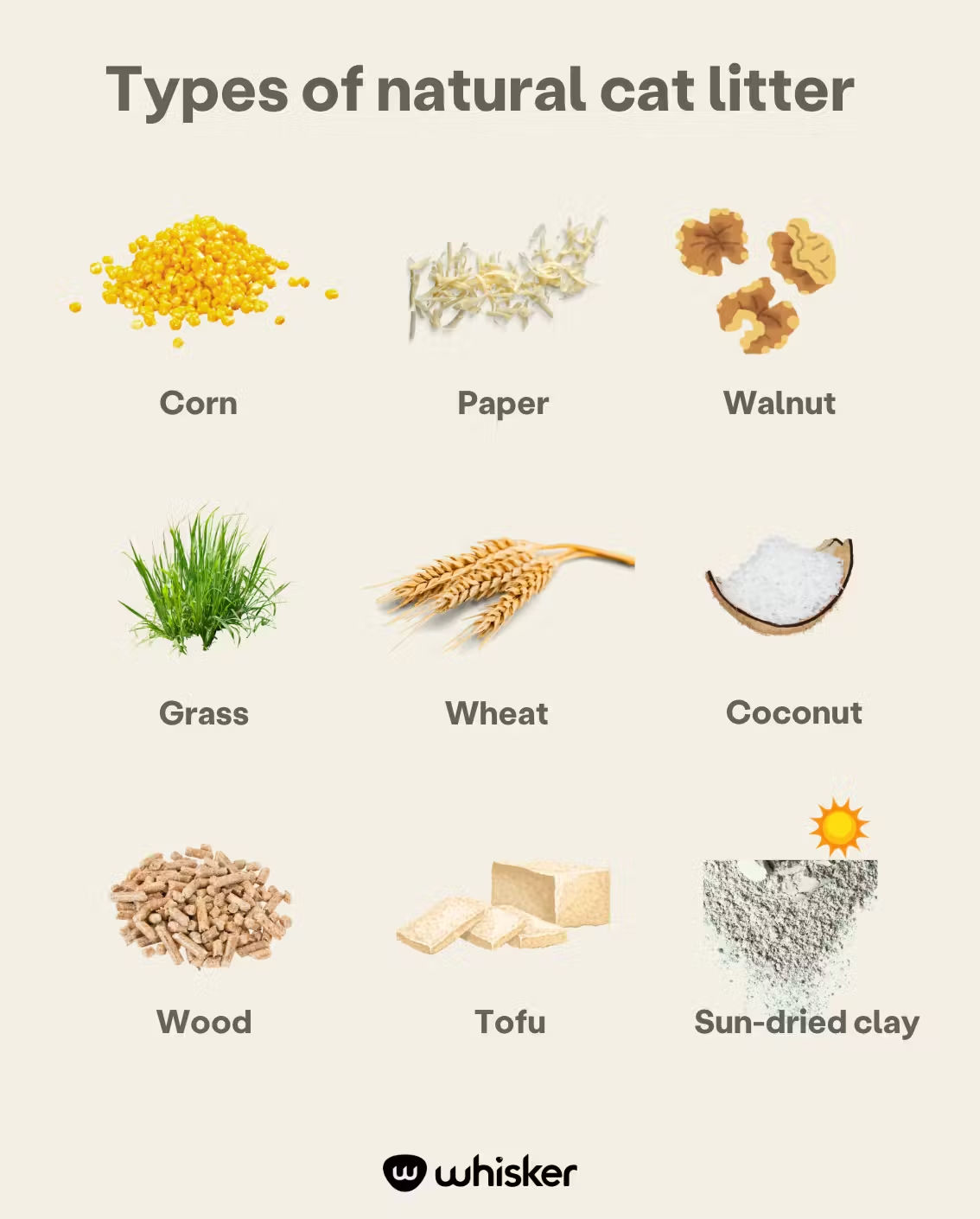
There are many plant-based, low-impact cat litters on the market | Source: Litter Robot by Whisker
These litters often perform just as well for odor control and clumping, while relying on renewable or recycled materials. They’re increasingly just as affordable, being made from recycled paper waste or agricultural byproducts. Some even offer additional benefits, such as being flushable in the toilet.
In my household, we’ve switched from clay litter to an affordable supermarket-brand recycled cardboard litter for our cat. It’s a switch that’s given me genuine peace of mind, knowing we’re not exposing her or ourselves to harmful dust, on top of having a lower environmental impact.
So if you haven’t already, how do you make the switch? Compare the different types of sustainable litter available to see which best suits your needs and preferences. This guide is one of many online that can help you decide. Start by mixing a sustainable litter with your current one over several days—most cats adapt better gradually. You might have to try different materials if one doesn’t suit you or your cat. But there are so many options that you’re bound to find a sustainable litter that works for you!
Want to do more?
Get updates on climate progress and how you can help.