
Invest some of your 401K into 'ESG' funds
Many Company 401K providers have 'ESG' options, which invest specifically in companies with documented ethical standards. These typically have very similar risk profiles to index funds, and avoid industries like fossil fuels.
Invest some of your 401K into 'ESG' funds
By: Esperanza Navarro
In the United States, many medium and large companies offer their employees 401(k) plans, a retirement benefit with tax advantages. Each company chooses a provider (such as Fidelity or Vanguard) and selects a limited menu of investment options, including stock funds. You may not think that this has anything to do with climate action, but the truth is that you have a choice which companies you invest in. Many retirement plans offer ESG (environmental, social, and governance) funds, which focus on only certain companies that meet ethical and other standards
An ESG investment fund works like any other: it is a selection of many companies chosen according to a pre-established strategy. However, the difference lies in the fact that they only invest in companies with a commitment to environmental, social, and governance (ESG) principles, regardless of the sector they belong to, whereas traditional funds invest in all types of companies.
ESG funds are a form of socially responsible investing (SRI), guided by several criteria: by exclusion (e.g., ignoring controversial companies such as tobacco or weapons manufacturers, or those violating international treaties), by inclusion (proactively collaborating with companies and governments seeking to reduce polluting emissions or introduce better compensation practices), by supporting companies with the best ESG scores, or by backing those whose core activities focus on social issues or the fight against climate change.
Perhaps even better, ESG funds have historically kept up with the performance of more traditional index funds, and may even offer lower risk, according to NerdWallet’s article on sustainable investing.
And due to growing demand, more and more companies are including at least one ESG option in their internal menu. All you need to do is review the list of available funds for your retirement plan, look for those labeled "ESG," "Sustainable," or "Responsible," and allocate a percentage of your automatic contributions to that fund.
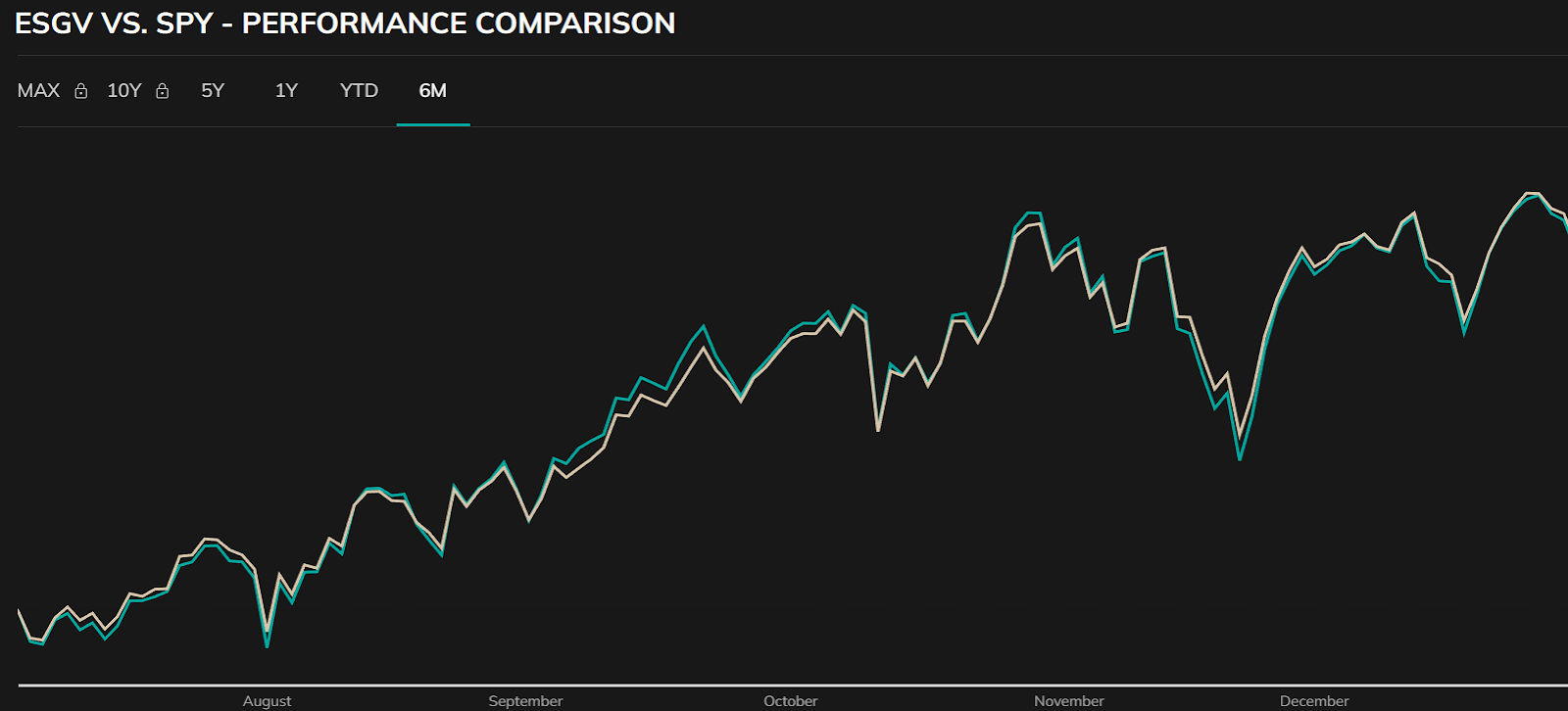
Like with general investing, its a good idea to make sure you diversify your investments, such as choosing different company sizes (large cap and small cap) and investing in companies across the world. In many cases, ESG funds are set up to match closely to another index, but with some companies removed that do not meet the standards. For example, the ESGV fund closely maps the the S&P 500, and the price matches pretty closely over time.
For those living outside the U.S. or without access to a 401(k), the alternative is to open an international investment account (brokerage) on platforms like Interactive Brokers or eToro to purchase global ESG ETFs, such as the iShares ESG Aware MSCI USA ETF (ESGU). The key difference is the lack of the specific tax advantages of a 401(k). Before investing, it is crucial to seek advice from a financial advisor. Although studies, like one from the 'Journal of Impact and ESG Investing' in 2022, indicate that these funds often have slightly higher returns and lower costs than traditional ones, they are not without risks, as some ESG funds include companies with questionable regulatory compliance records.
If your goal is to align your financial future with a more sustainable one, reevaluating your investments toward an ESG fund is a concrete action you can take today. This shift allows you to direct your capital toward companies that prioritize social, environmental, and corporate responsibility, without necessarily sacrificing performance.
Want to do more?
Get updates on climate progress and how you can help.