
Attend a Local Government Meeting on Energy or Transit.
City and county governments control building codes, zoning, transit, and energy procurement. Showing up to one meeting, even just to listen, puts you in the room where local climate decisions actually get made.
Most people think of climate policy as something that happens in Washington. But a significant share of the decisions that shape emissions in your daily life, what buildings look like, how transit is funded, what energy your city buys, happen at the city and county level. And unlike federal politics, local government is genuinely accessible. Council members sit in the same room as residents. Public comment periods are real. Showing up matters in a way that is much harder to ignore than an email.
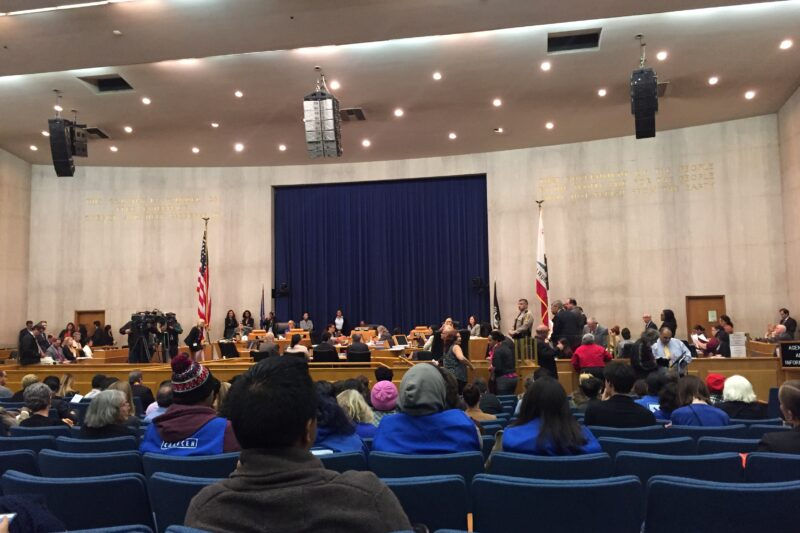
You don't have to speak. You don't have to prepare anything. Attending once, even just to sit and observe, gives you a completely different picture of how decisions get made in your community. And if you do want to speak, public comment periods at most local meetings allow any resident to address the council directly, typically for two to three minutes, on any agenda item.
The most effective local climate actions tend to be specific: supporting a proposed bike lane, asking questions about a city's energy procurement contract, showing up when a new development's building code standards are being reviewed. These are not abstract policy debates. They are practical decisions with direct emissions implications that get made with or without public input.
How to find your next meeting:
Search "[your city name] city council agenda" or "[your county name] board of supervisors agenda" to find upcoming meetings and what's on the schedule. Most agendas are posted publicly at least a week in advance. Look for items related to energy, transportation, zoning, or sustainability. Many local governments now offer hybrid attendance options so you can join online if showing up in person isn't practical.
If you want to speak, most public comment periods simply require you to sign up at the start of the meeting. No pre-approval, no credentials required.
Want to do more?
Get updates on climate progress and how you can help.