"Net zero" is not the same as zero emissions
The common goal for climate is "Net Zero", which many interpret as eliminating all of our emissions. This can make the goal seem impossible, since there are so many smaller emissions sources that are much harder to eliminate. Its important the remember the "Net" part though - it means that the goal is reducing emissions so that they match the CO2 sinks, things like plants and algae that take CO2 out of the air. While we do need to drastically reduce emissions to get here, to around 10-20% of today, this is a significantly more achievable goal than 0%.
When I first started learning about climate targets, I assumed “Net Zero” meant eliminating every single source of emissions. It felt almost impossible. I imagined a world with no cars, no heating, no travel, no industry, and none of the everyday things people rely on. Growing up in communities where practicality always came first, the idea of “zero emissions” never felt like something people would get behind.
Eventually, I learned that Net Zero does not mean removing everything that creates carbon. It is actually about balance. We reduce emissions as much as we realistically can, then match what remains with systems that naturally pull carbon out of the atmosphere. Forests, wetlands, healthy soils, and oceans already absorb carbon every day, and protecting or restoring these places strengthens that natural balance. Once I understood that Net Zero was about balance rather than total elimination, the concept felt far more achievable.
Net Zero is reached when the amount of carbon we release equals the amount removed. NASA explains it as a balancing act between what goes into the atmosphere and what comes out. Most progress still comes from reducing emissions first. Cleaner energy, more efficient homes and buildings, improved transportation options, and better land use all help lower the amount of carbon entering the atmosphere. In many places, these are already familiar, practical steps, even if people do not think of them as climate action.
One of the clearest ways to understand this balance is the bathtub analogy. Imagine emissions as water flowing in through the faucet. The water level in the tub represents the amount of carbon in the atmosphere. The only way to keep the tub from overflowing is to both turn the faucet down and let more water drain out. In the real world, that drain is made up of carbon sinks, meaning natural systems that absorb and store more carbon than they release. Forests, soils, wetlands, and oceans all act as carbon sinks by pulling carbon out of the atmosphere every day. When we protect or restore these natural systems, the drain gets wider. When they are damaged, the drain shrinks. Net Zero is reached when the water coming in is equal to the water flowing out. This model shows that climate action is not only about cutting emissions. It is also about strengthening the natural systems that already help keep the atmosphere in balance.
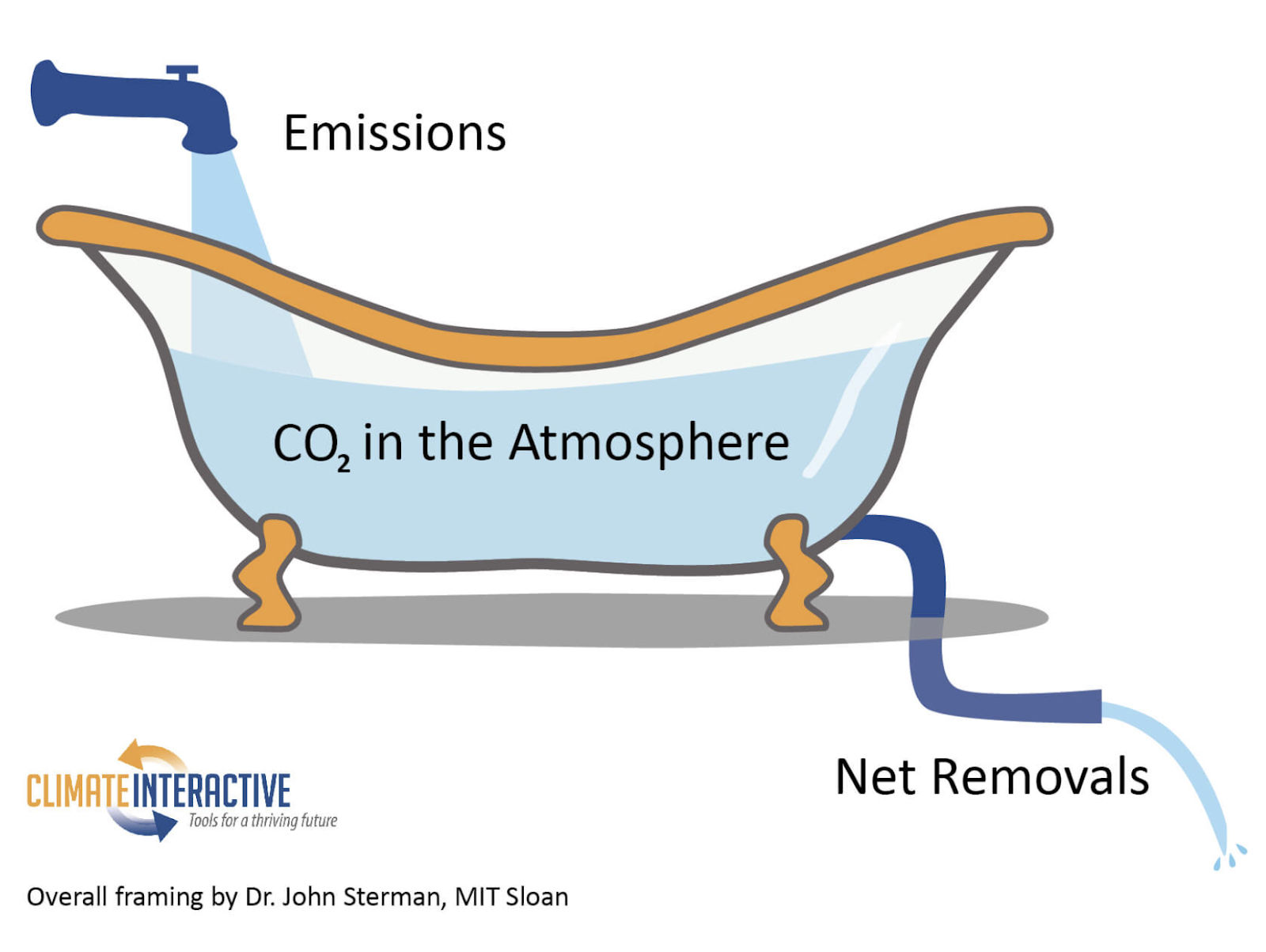
Want to play with the idea yourself? Try the EN-ROADS Climate Solutions Simulator. It lets you adjust real-world climate choices and see how those changes affect emissions and temperature over time: EN-ROADS Climate Solutions Simulator.
This way of thinking also reveals why carbon sinks deserve more attention. Carbon sinks are natural systems like forests, soils, wetlands, and oceans that absorb and store carbon. The figure below shows why they matter: even as human emissions have increased, land and ocean sinks have continued pulling a large share of carbon out of the atmosphere. At the same time, a significant portion still remains in the air, which is why both reducing emissions and strengthening sinks matter. Many of these sinks are under pressure from land degradation, deforestation, soil loss, and coastal erosion. When those systems weaken, the planet loses some of its natural capacity to absorb carbon. By investing in healthier forests, wetlands, and agricultural soils, societies effectively widen the drain. These improvements also bring benefits beyond carbon removal. Restored wetlands can reduce flooding. Healthy soils can improve food security and drought resilience. Coastal ecosystems can buffer storms and reduce erosion. In some cases, communities can even come out ahead of where they started, not just repairing damage but creating landscapes and systems that are stronger, safer, and more resilient than before.
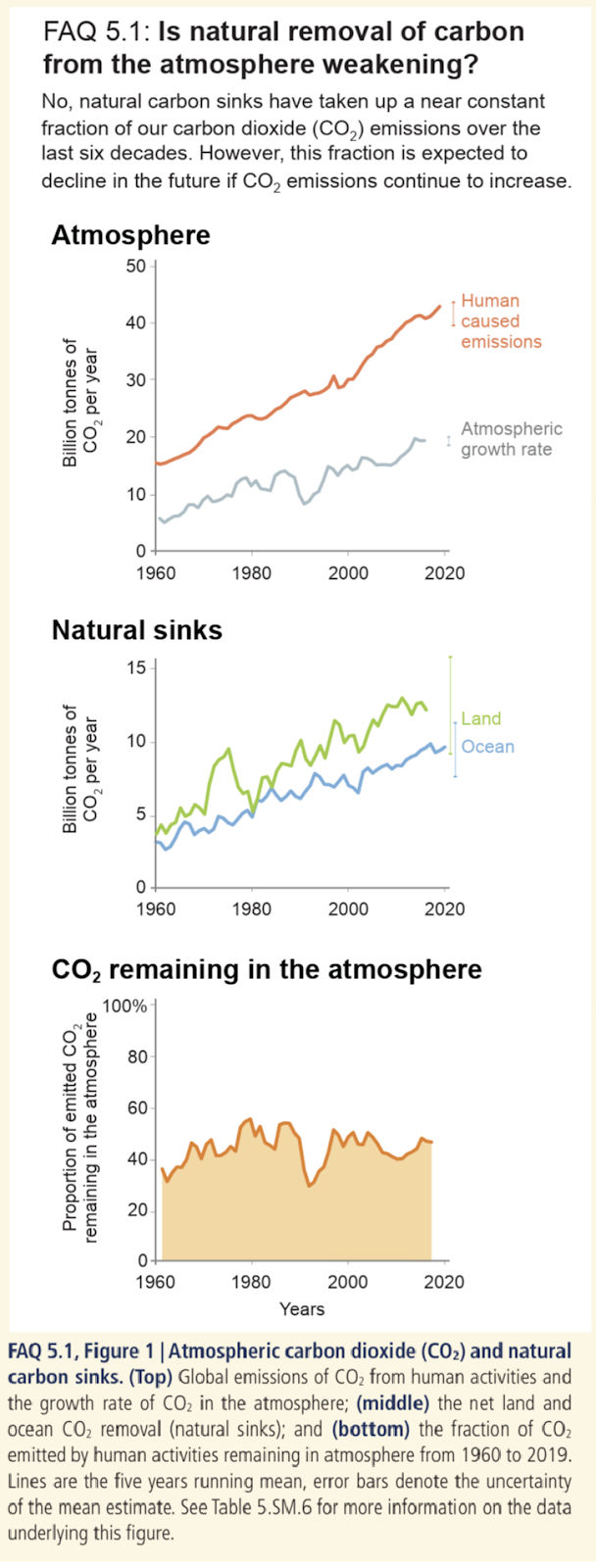
Human-caused carbon emissions, natural carbon sinks, and the share of carbon remaining in the atmosphere over time. Source: IPCC AR6 WG1, FAQ 5.1, Figure 1.
Part of what makes Net Zero realistic is that some sectors are still incredibly difficult to bring fully to zero emissions right now. Aviation, shipping, steel, cement, refrigeration, and agriculture all fall into that category. These systems still matter, but current tools cannot yet fully eliminate their emissions. That is why Net Zero sets a practical target instead of an impossible one. Scientists estimate that we can cut most emissions using tools that already exist. The remaining portion can then be balanced through natural carbon sinks, which continue absorbing carbon whether or not new technology is added.
Understanding this difference matters. In the places where I grew up, climate conversations could get tense very quickly if people thought it meant losing the things they depend on. The phrase “zero emissions” often makes people picture major sacrifices that do not feel realistic. People imagine restrictions on driving, heating, farming, ranching, or travel. They imagine environmental goals being forced into daily life in ways that feel out of touch with rural communities or working-class expectations. When people learn that Net Zero means reducing what we can and balancing the rest with natural systems, the idea becomes much more reasonable. It shifts the conversation away from fear and toward practical steps that communities are already comfortable with.
It also helps to recognize that many of the strongest carbon sinks are in places cared for by farmers, ranchers, fishers, foresters, Tribal communities, and other groups who understand the land better than most policymakers. These groups have long protected soil, water, forests, and coastlines, often out of tradition or necessity rather than climate language. Their work already widens the drain in the bathtub model. A stronger focus on sinks does not replace that knowledge. It validates and supports it.
Net Zero is not about shutting everything down. It is about aligning our emissions with the planet’s ability to absorb them. Most people want cleaner air, healthier forests, and safer communities regardless of politics. Most people want infrastructure that lasts, farms that stay resilient, and landscapes that support future generations. When people understand that Net Zero builds on tools we already have, practices we already use, and natural systems we already rely on, the goal becomes clearer, more practical, and far less intimidating.
The challenge is not perfection. It is progress at a pace that protects our communities while honoring the natural balance the planet already offers. It is also a reminder that people can have a positive impact not only by shrinking their own footprint, but by helping restore the systems that absorb carbon for everyone. Supporting wetland restoration, sustainable farming, reforestation, soil health, and local conservation efforts can strengthen the natural balance we all depend on. That is what Net Zero aims to achieve.
So, what can you do?
- Use less energy at home by turning off lights, adjusting the thermostat, and unplugging things you are not using.
- Drive less when you can by combining errands, carpooling, walking, or using public transportation.
- Waste less food and compost if possible to reduce what ends up in landfills.
Learn more:
Want to learn more?
Get updates on climate progress and how you can help.