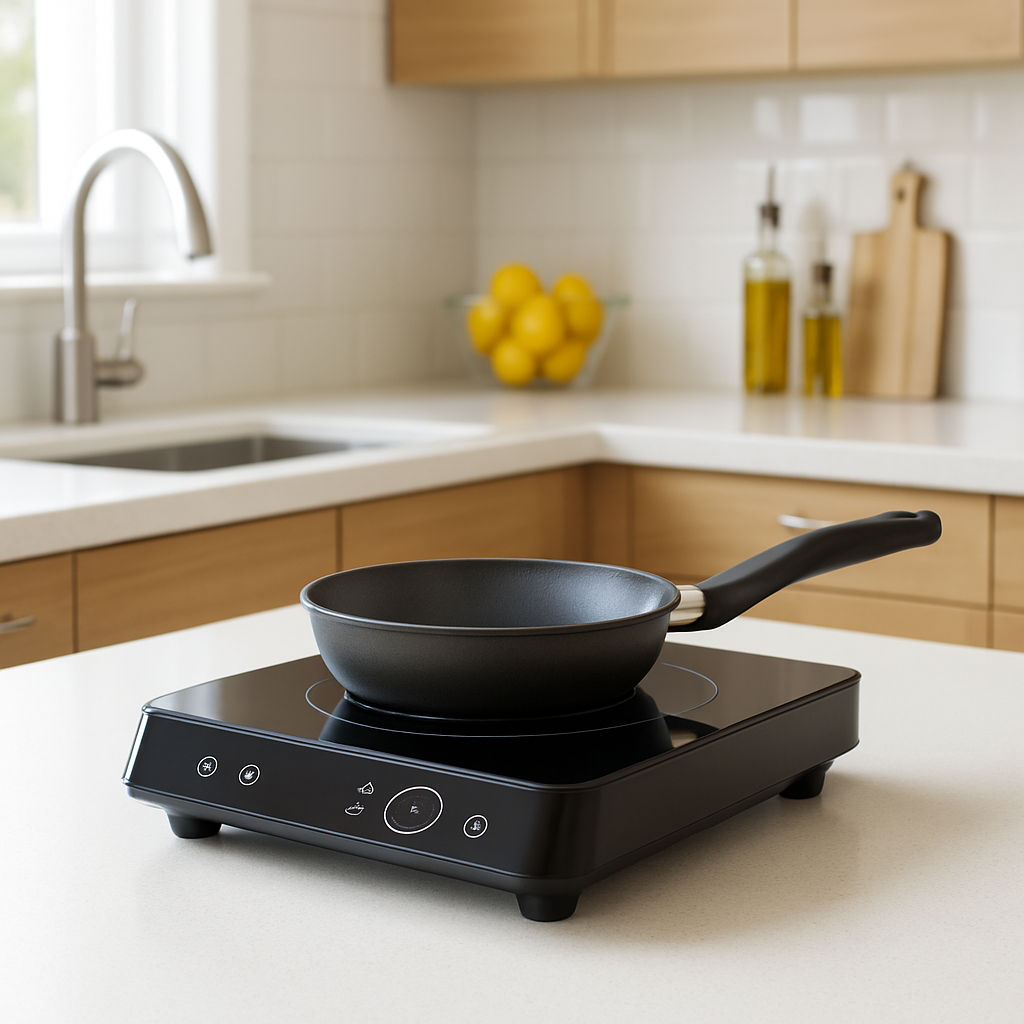
Try a portable induction cooktop
Induction stoves are super efficient and fast, but full ranges are pretty expensive. Fortunately, you can get single burners for much less and still get most of the benefits
Induction cooking can sound expensive, but you can test it without replacing your whole stove.
A portable induction cooktop gives you a low-commitment way to try induction at home, often in roughly the ~$50 to ~$100 range.

What to know
Induction cooktops use electromagnetic energy to heat the pan directly, instead of heating a burner first and then transferring that heat to cookware. This means less wasted heat and faster response than standard electric coils.
Compared with gas cooking, induction avoids indoor combustion and fumes while you cook.
Its also very energy efficient, which is why we consider it a climate action. The U.S. Department of Energy notes that induction can transfer around 85%-90% of its energy to the pan, compared with much lower efficiency for gas and standard electric cooking. This means that more of the energy is going into actually cooking your food. Consumer Reports testing found induction can boil water about 20%-40% faster than tested gas and traditional electric cooktops.
Because the induction process heats the pan directly and not a burner, they are much easier to clean than standard electric glass cooktops, where grime can get baked on by the high heat.
Induction does require compatible cookware. A quick test: if a magnet sticks firmly to the bottom of a pan, it should work on induction. Many stainless steel and cast-iron pans already do, while some aluminum, glass, or copper cookware will not work unless they have an induction-compatible base.
How to try it
If you are curious but not ready for a full appliance upgrade, a portable unit is a practical way to give it a try without much risk. You can use one for regular meals, boiling water, or as an extra burner.
There are many options, but here are a couple to help you decide:
- We went with a budget option; it heats well but the interface is pretty basic: AMZCHEF portable induction cooktop
- If you want a cleaner interface and more options, more premium ones are ~$100, like this one: Duxtop portable induction cooktop
Want to do more?
Get updates on climate progress and how you can help.