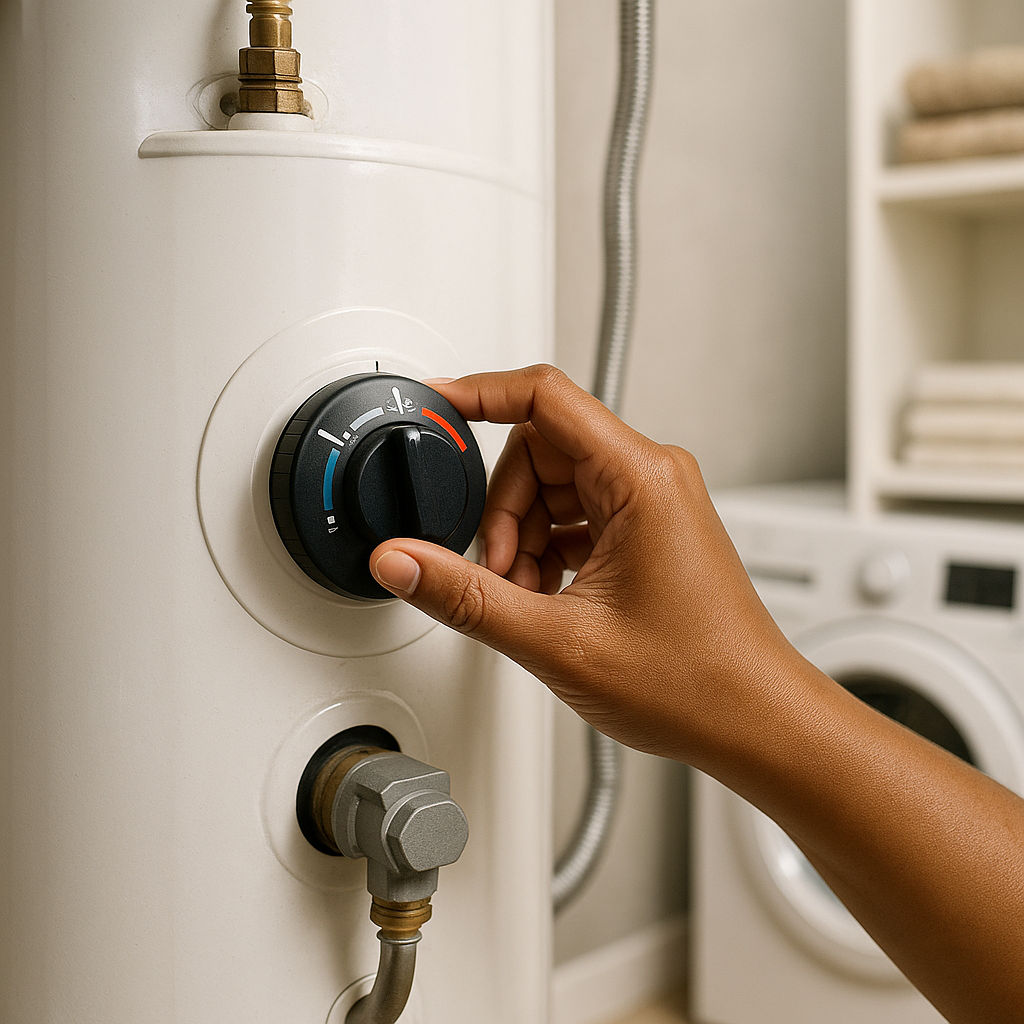
Check your water heater's set temperature
Your water heater is one of the biggest energy users in the house, and a lot of it is just keeping the water warm even if you aren't using it. Often, they are keeping the water too hot and just using extra power
Many people don’t think about their water heater until something suddenly goes wrong, like the water turning cold mid-shower. But this quiet appliance, running 24/7 to keep the water hot even when no one is at home, makes up 14 to 18% of the average American’s utility bill; that is $400 to $600 every year or roughly $33 to $50 per month. The good news is that if you adjust the temperature of your water heater, you can reduce that expense, increase your heater’s lifespan, and be more energy efficient.
Some manufacturers set their water heaters to 140°F by default, which is 20 degrees hotter than most homes need. At 120°F, your water is still hot enough for laundry, showers, and dishes, but safe enough to prevent scalding. Setting your water heater to 120°F will save you about $36 to $61 each year in lower standby heat loss alone, and more than $400 in total for using less power to heat water in your home. That is money back in your pocket.
Lowering the temperature of your water heater is easier than you think. For gas models, the thermostat dial is by the gas valve, which is near the bottom of the tank. For electric heaters, you will find it behind a screwed-on panel. Once you have located your thermostat dial, turn off the power to the water heater and adjust the dial to 120°F.
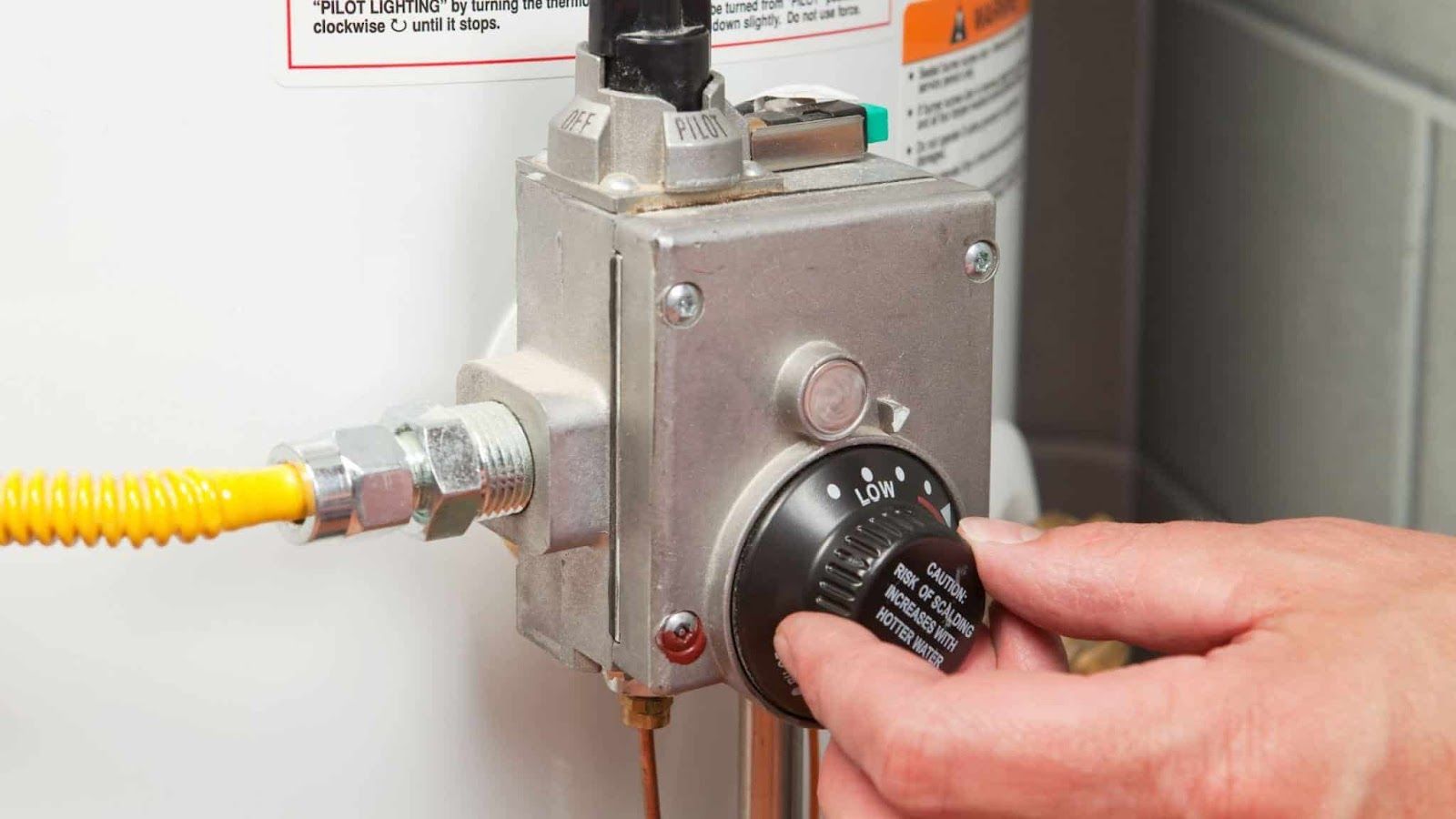
Example of a water heater thermostat dial. Set to “low” or “120°F”
Thermostat dials are usually not accurate, especially those on old water heaters. If your dial does not have numbers on it, look for markings like “low,” “medium,” or “high.” Set the dial to low or just below medium and then use a kitchen thermometer to check the temperature of the hot water coming out from the tap farthest from your heater. If the temperature is still not right, wait a few hours and check the tap water again. Keep adjusting the thermostat dial until your water reaches 120°F.
An easy alternative is to lower your water heater’s temperature slightly and see how it goes over the next few days. If the hot water runs out too quickly, increase the temperature slightly again. Do this until the water feels right for you. It’s okay to do a bit of trial and error because every home is different.
The U.S. Department of Energy has a free do-it-yourself guide to guide you through the adjustment process. Lowering the temperature of your water heater is a quick, easy task that pays you back every month by saving you money and reducing your carbon footprint. If you live in a rental, contact your landlord before making any adjustments.
Learn more:
https://www.energy.gov/energysaver/do-it-yourself-savings-project-lower-water-heating-temperature
Want to do more?
Get updates on climate progress and how you can help.